 Zhongshan Horns Metal Processing
Wheelie Bin Axle Sizes: Diameter, Length and Type
Most wheelie bin axle diameters are 21.5 mm, while 19 mm and 22 mm also appear on some models. Length depends on the width of the bin base, for example 480 mm or 550 mm. Axles come solid, semi-hollow or hollow, in zinc-plated low-carbon steel, or in stainless steel for coastal and washdown sites.
Key takeaways
- Measure the bin axle diameter with calipers away from the ends, because the ends often have a smaller machined section.
- A 21.5 mm diameter is the most common size, but 19 mm and 22 mm axles also exist.
- Length follows the bin base width, so measure end to end or send us the bin model.
- A hollow stainless axle weighs about a quarter of a solid one in our range: 0.33 kg against 1.18 kg.
- Zinc plating suits most sites, while stainless steel suits coastal towns, food waste and washdown areas.
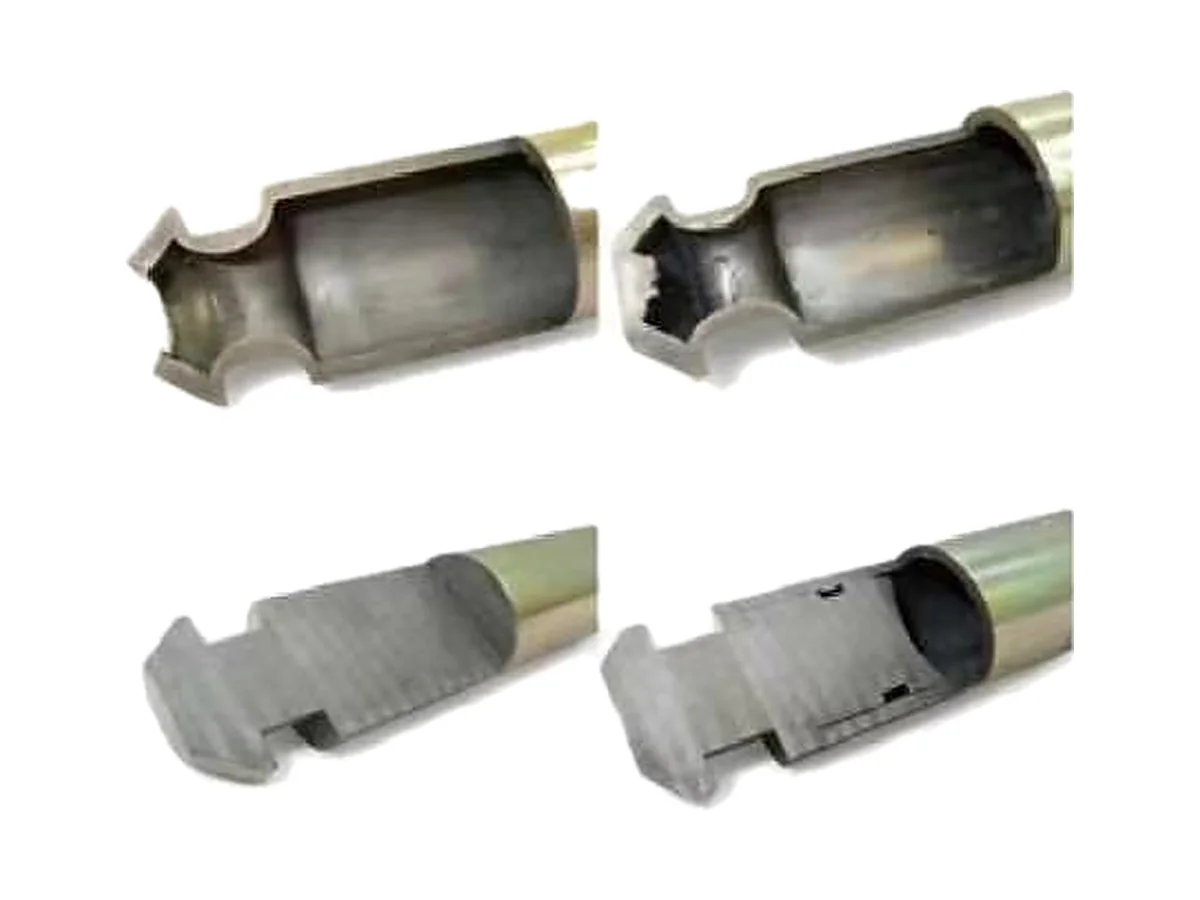
What a Bin Axle Does
The axle is the steel bar that runs under a two-wheel bin and carries both wheels. It looks simple, yet it takes the full load every time a crew tips the bin back and rolls it to the lorry.
That load can be large. For example, Wealden District Council lists a maximum load of 144 kg for a 360 litre bin. So the axle has to stay straight, hold its wheels and resist rust for years outdoors.
Three numbers define a bin axle: the diameter, the length and the construction. Get all three right and the wheels run true. Get one wrong, and the wheels wobble, rub or fall off.
Bin Axle Diameter: 19, 21.5 or 22 mm
Most two-wheel bins use a 21.5 mm axle. Still, you will also find 19 mm and 22 mm axles on some models, and older bins sometimes differ again.
To measure, use calipers on the middle of the shaft. Avoid the ends, because many axles have a machined section or a groove there for the wheel clip. As a result, the ends often read smaller than the true diameter.
If you have no calipers, check the wheel instead. The bore of the wheel hub matches the axle, so a wheel that fits loosely on a new axle usually means the wrong diameter.
| Feature | Options | Notes |
|---|---|---|
| Outer diameter | 19 / 21.5 / 22 mm | Other sizes to drawing |
| Length | Cut to the bin | For example 480 or 550 mm |
| Construction | Solid, semi-hollow, hollow | Hollow with open or closed ends |
| Wall thickness | 1.8 / 2.0 / 2.5 mm | Hollow types only |
| Steel | DIN ST 37.2 (Q235B) | Or equivalent |
| Finish | Zinc, 10–60 µm | Stainless on request |
How to Measure Bin Axle Length
Length depends on the width of the bin base. The simplest method is to pull out the old axle and measure it end to end.
If the axle has to stay in place, measure the width of the axle housing instead. Then add the width of both wheel hubs and a little extra for the clips.
Our range includes common lengths such as 480 mm and 550 mm. For bin makers, though, we cut every bin axle to the length on your drawing, so one supplier covers several bin models.
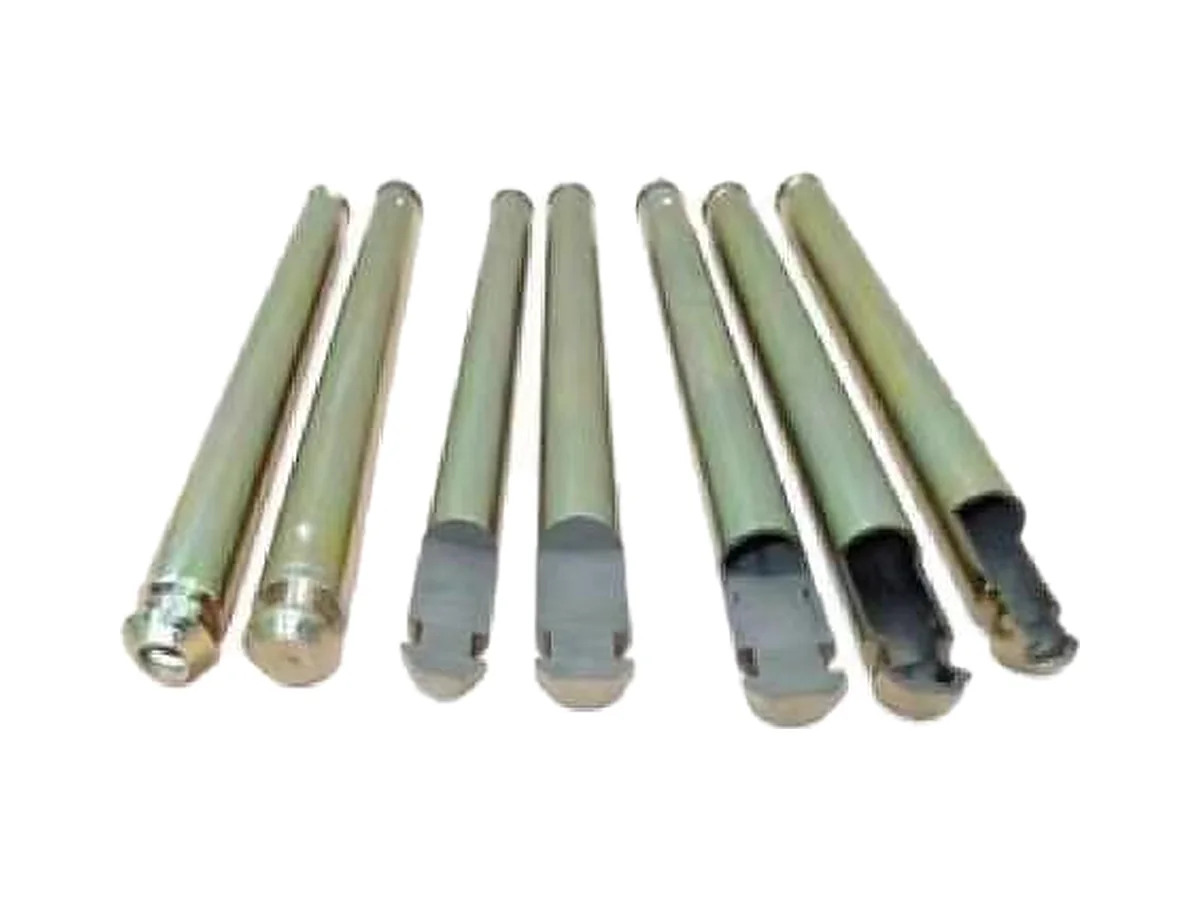
Solid, Semi-Hollow or Hollow?
Each construction trades weight against cost and end strength. Choose the one that matches how hard the bins work.
- Solid shaft: the strongest and most common choice, for heavy-use commercial bins and harsh outdoor conditions.
- A semi-hollow shaft keeps solid steel where the wheels lock on and removes weight from the middle.
- Hollow with closed ends: light, with formed ends that keep water, dirt and insects out of the tube.
- Open-ended hollow tube: the lowest weight and cost, for bin designs that protect the axle ends.
In practice, many bin makers pick a semi-hollow bin axle for household bins. It gives a good balance of cost, weight and strength for high-volume production.
For commercial sites, on the other hand, the solid version is the safe default. It shrugs off the knocks that come with heavy loads and rough ground.
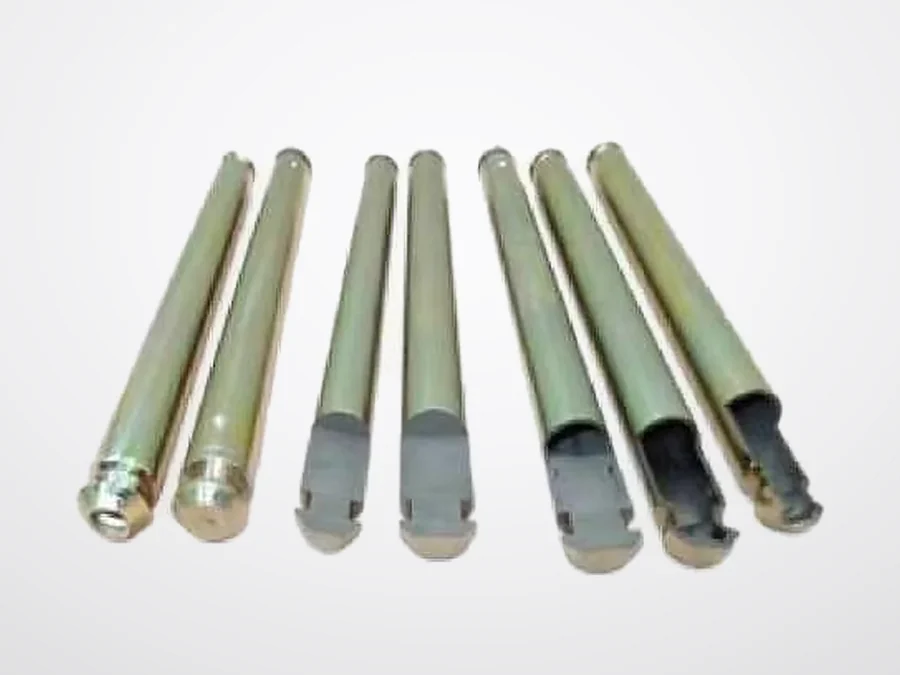
How Much Lighter Is a Hollow Axle?
Weight matters for freight, for handling and for the bin itself. Our stainless steel axles show the difference clearly.
A solid stainless shaft weighs 1.18 kg in the short length and 1.44 kg in the long length. The hollow version weighs 0.33 kg and 0.38 kg. So a hollow shaft comes in at roughly 26 to 28 percent of the solid weight.
Across a large order, that adds up fast. For instance, 1,000 long solid axles weigh about 1,440 kg, while 1,000 long hollow axles weigh about 380 kg. That saves more than a tonne of freight on every thousand pieces.
| Length | Solid shaft | Hollow shaft |
|---|---|---|
| 480 mm (short) | 1.18 kg | 0.33 kg |
| 550 mm (long) | 1.44 kg | 0.38 kg |
Steel Grade and Inspection Papers
Our standard axles use low-carbon steel to DIN ST 37.2, which Chinese mills supply as Q235B, or an equivalent grade. This steel bends rather than snaps, which suits a part that takes knocks every week.
For large contracts, ask for an inspection document. Under EN 10204, a type 3.1 certificate reports specific test results and carries the approval of an inspector who works independently of production, as this summary of EN 10204 explains. A type 3.2 certificate adds a second sign-off from the buyer's representative or an official inspector.
In addition, agree the tolerance on diameter and length before production. That small step prevents most fitting problems later on the assembly line.
Zinc Plating or Stainless Steel?
Standard axles carry 10 to 60 µm of zinc plating. As the galvanization article explains, zinc protects steel in two ways: it forms a barrier, and it corrodes first so the steel underneath stays sound.
Most platers add a passivation layer on top of the zinc. According to Wikipedia on chromate conversion coatings, this layer protects the zinc from white corrosion. However, older versions used hexavalent chromium, which European rules now push manufacturers to eliminate.
Two ISO standards reflect that split. ISO 19598 covers zinc coatings with Cr(VI)-free treatment, including minimum thickness and corrosion resistance. Meanwhile, the 2025 edition of ISO 2081 now covers zinc treated with solutions containing chromium (VI). So state which one you want on the order.
Stainless steel works differently. It contains at least about 10.5 percent chromium, which forms a thin oxide film that repairs itself, as the stainless steel article notes. That makes a stainless bin axle the better pick for coastal towns, food waste and washdown areas.
Hot-dip galvanizing is a third route, which ISO 1461 covers for fabricated steel articles. It builds a much thicker zinc layer. Still, for a precise shaft that must fit a wheel bore, electroplating gives better control of the final diameter.
Order the Right Axle in Four Steps
A clear order avoids most mistakes. Work through these steps before you ask for a quote.
Then add the end detail. Some wheels lock onto a groove, while others need a cap or a clip, so a photo of the axle end helps a lot.
Lastly, decide on the supply format. We ship axles loose for bin makers, or as wheel-and-axle kits for council replacement programmes.
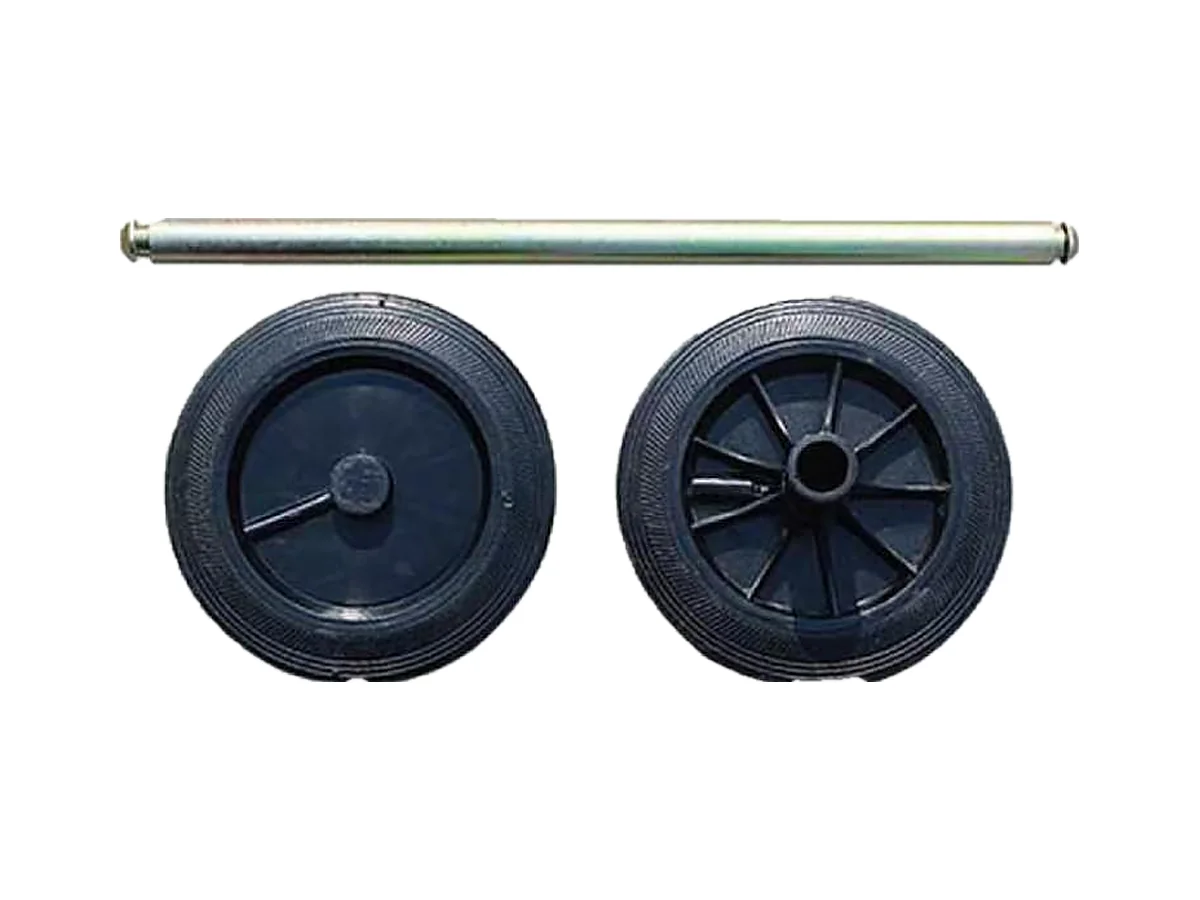
Matching Axles to Wheels and Standards
The axle and the wheel work as a pair. For example, Buckinghamshire Council lists a 200 mm wheel diameter for its 140, 240 and 360 litre bins, and that wheel needs the right axle bore to run true.
The bins themselves follow EN 840-1, which sets the dimensions and design of two-wheel containers up to 400 litres. The UK edition is BS EN 840-1:2020, and EN 840-5 sets the performance requirements and test methods.
So when you replace an axle, keep the same diameter and length as the original. Our guide on replacing wheels and axles shows the fitting steps, while the axle range lists every bin axle we make.
Bin Axle Ends and Wheel Retention
The ends of a bin axle do the hardest job. They hold the wheels in place, and they take every knock when a bin hits a kerb sideways.
Different bins use different end details. Some wheels lock onto a groove machined into the axle, while others rely on a push-on cap or a spring clip. So before you order, check which system your bin uses and send a clear photo of the end.
Our axle ends leave the factory free of burrs and sharp edges. That matters for two reasons: a smooth end slides into the hub without damage, and it keeps fingers safe during fitting.
On request, we also paint the ends in a colour code. As a result, a worker on a busy line can tell a 19 mm axle from a 21.5 mm one at a glance.
Which Bin Axle Suits Which Site?
There is no single best axle for every bin. Instead, match the bin axle to the site, the load and the budget.
- Household kerbside bins: a semi-hollow or closed-end hollow axle keeps weight and cost down.
- For commercial yards and rough ground, choose a solid axle to handle heavy loads and hard knocks.
- Coastal towns, food waste and washdown areas need stainless steel, since salt and cleaning water attack zinc.
- Budget replacement programmes often use an open-ended hollow axle where the bin protects the ends.
If a site mixes these conditions, pick the tougher option. A slightly heavier bin axle costs less than a second repair visit.
Approve a Sample Before Mass Production
For a new bin model, always approve a sample first. We make a small batch to your drawing, then you fit it to a real bin body and roll it over rough ground.
During that trial, check three things. First, the wheels should turn freely without rubbing. Second, the clips or caps should seat fully. Third, the axle should sit centred in the housing.
Once the sample passes, we lock the specification and use it for every later order. That way, the thousandth bin axle fits exactly like the first.
Packing and Shipping Axles
Steel shafts are heavy and long, so packing affects both cost and condition on arrival. We bundle axles tightly and protect the ends, because a dented end will not take a clip.
For export, the weight of the load often decides the shipping plan before its volume does. That is one more reason why hollow and semi-hollow designs appeal to buyers who ship by the container.
Also, ask for moisture protection on long sea routes. Plated steel sitting in a humid container for weeks can show white marks, even when the coating still protects the steel underneath.
Common Bin Axle Mistakes
- Measuring at the end: the machined end reads small, so you order the wrong diameter.
- Guessing the length: a short axle lets wheels rub, while a long one sticks out and catches kerbs.
- Using plated steel by the sea: salt air wears zinc quickly, so stainless lasts longer there.
- Skipping the clip check: an old clip on a new axle often fails within weeks.
- Mixing sizes on one line: painted ends help workers tell 19, 21.5 and 22 mm axles apart.
Each mistake costs little to avoid. Even so, across thousands of bins, they add up to many wasted call-outs.
Key Terms Explained
- Outer diameter
- The width across the axle shaft, measured with calipers away from the machined ends.
- Semi-hollow axle
- A tube with solid steel ends, so it saves weight in the middle but keeps strength where the wheels lock on.
- Wall thickness
- How thick the steel tube is on a hollow axle. Ours use 1.8, 2.0 or 2.5 mm walls.
- Zinc plating
- A thin layer of zinc applied by electroplating that protects the steel underneath from rust.
- Passivation
- An extra treatment on top of zinc plating that slows white rust. Modern versions avoid hexavalent chromium.
Bin Axle Sizes: Questions and Answers
What size is a standard bin axle?
Most two-wheel bins use a 21.5 mm axle. However, some models use 19 mm or 22 mm, so measure across the shaft with calipers before you order.
Are bin axles universal?
Not quite. Diameter and length both vary by bin model, so measure both, or send us the model name and a photo of the base.
Is a hollow bin axle strong enough?
For most household bins, yes. Semi-hollow axles keep solid steel at the ends where the wheels lock on. For heavy commercial use, a solid axle is the safer choice.
Why do some axle ends have paint on them?
Factories paint the ends in different colours to tell sizes apart on a busy production line. The paint has no effect on strength.
Sources
- ISO: ISO 2081:2025, electroplated zinc with Cr(VI) treatments
- Wikipedia: Galvanization, encyclopedia article
- ISO: ISO 19598:2016, electroplated zinc with Cr(VI)-free treatment
- Wikipedia: Stainless steel, encyclopedia article
- iTeh Standards: EN 840-1:2020, 2-wheel containers up to 400 l
- DIN Media: BS EN 840-1:2020, UK edition
- NSAI Standards: EN 840-5, performance requirements and test methods
- ISO: ISO 1461:2022, hot dip galvanized coatings
- Wikipedia: Chromate conversion coating, encyclopedia article
- Wermac: EN 10204 inspection document types
- Buckinghamshire Council: Bin specification, Appendix A
- Wealden District Council: Bin sizes and maximum loads
Product sizes are typical; we confirm each order against your drawing or sample. Our editorial standards explain how we check facts and fix mistakes.