Castors for 660L & 1100L Bins – EN 840 Waste Container Casters
Castors for 4-wheel waste containers, certified to EN 840. Every model uses a pressed steel housing with bright zinc plating, a ball-bearing swivel head with dust cover, and a solid black rubber tread on roller bearings.
Choose a plastic (PP) hub for light weight and rust-free wheels, or a pressed steel hub for higher load and impact resistance. Use 200 mm for 660L and 1100L bins and 160 mm for smaller containers, with swivel or total-lock brake models (leading or trailing brake). In the US these are the dumpster wheels, dumpster casters and trash can casters used on plastic 4-wheel containers.
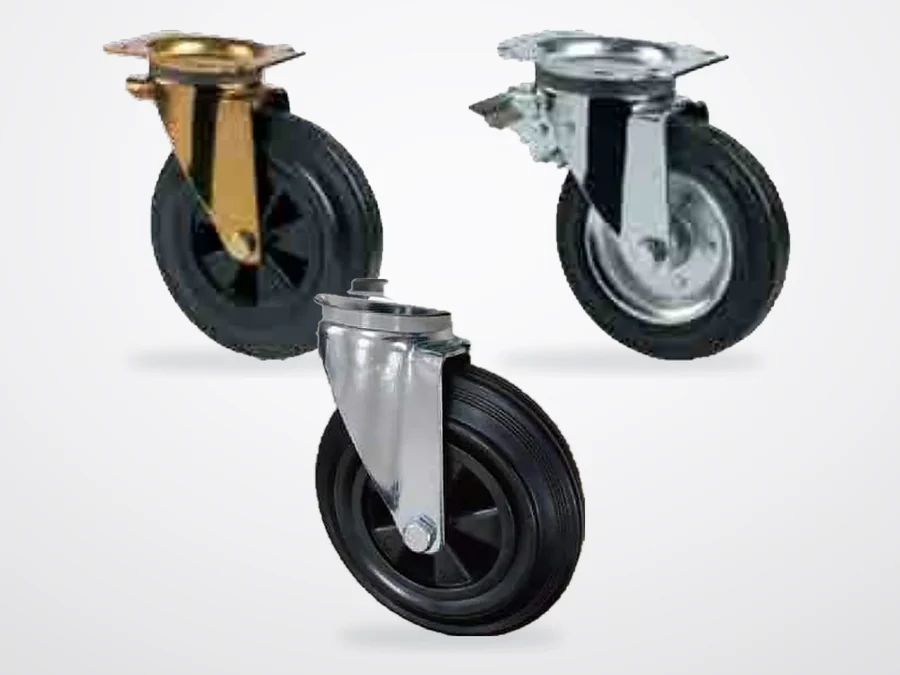
Castors for 660L & 1100L Bins – EN 840 Waste Container Casters: all parts
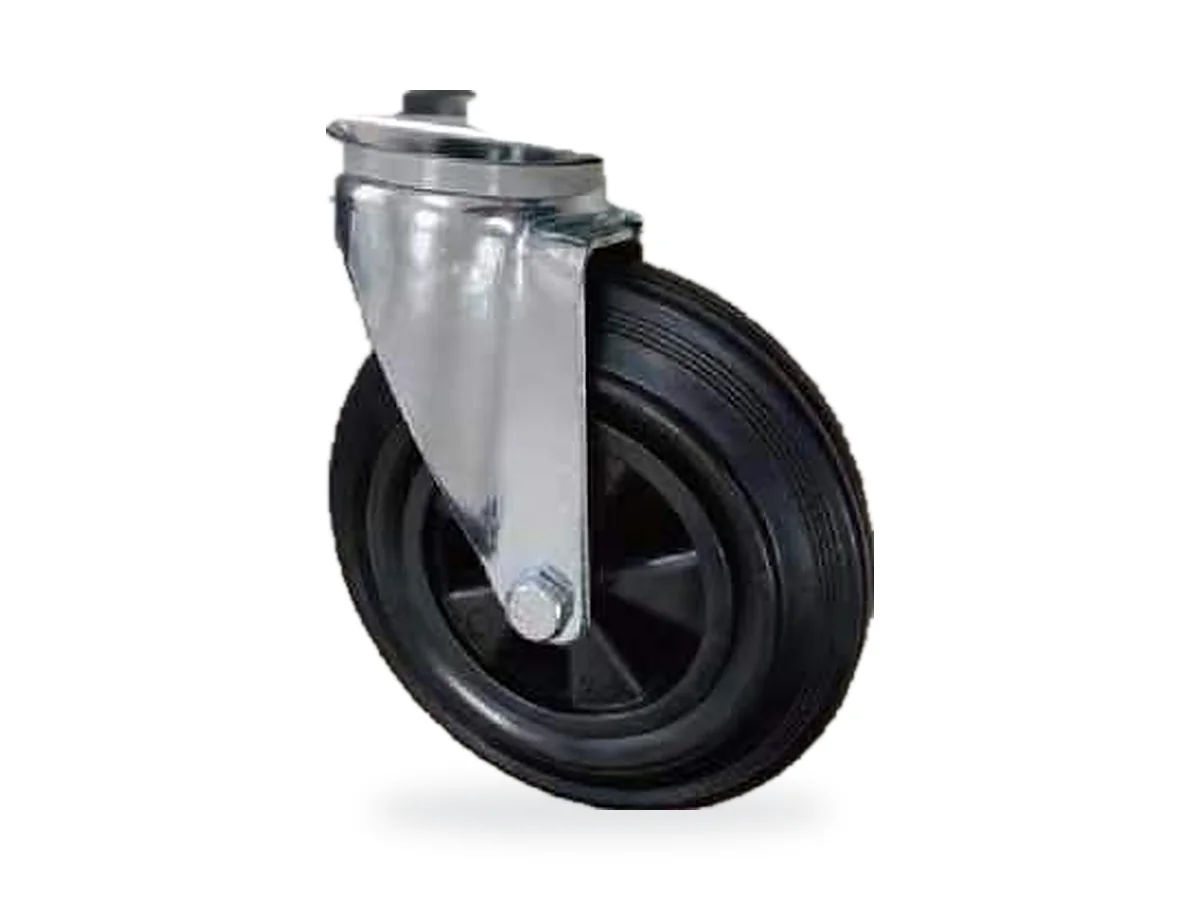
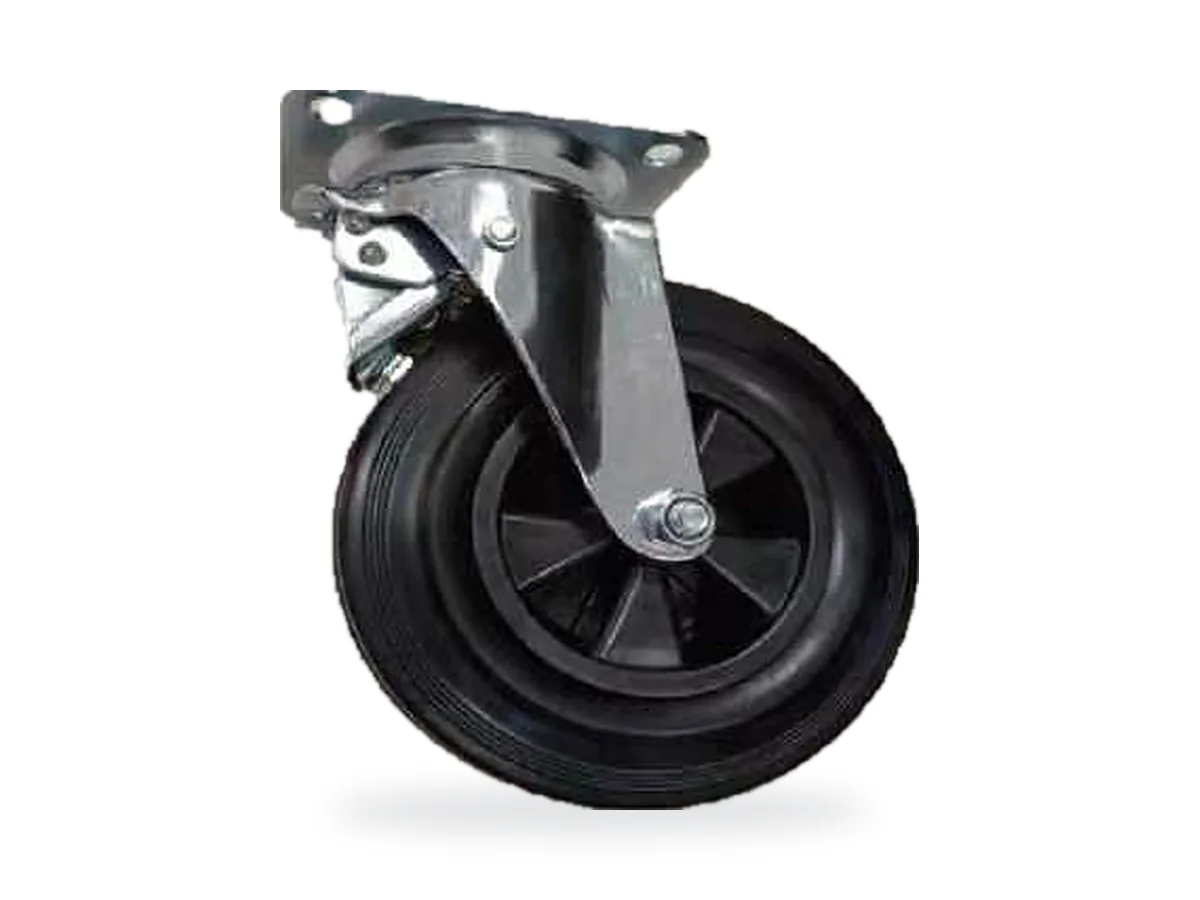
Bin Castor – Total Lock Brake, Plastic Hub (160 / 200 mm)
Ø160 / 200 mm · PP hub · Total lock
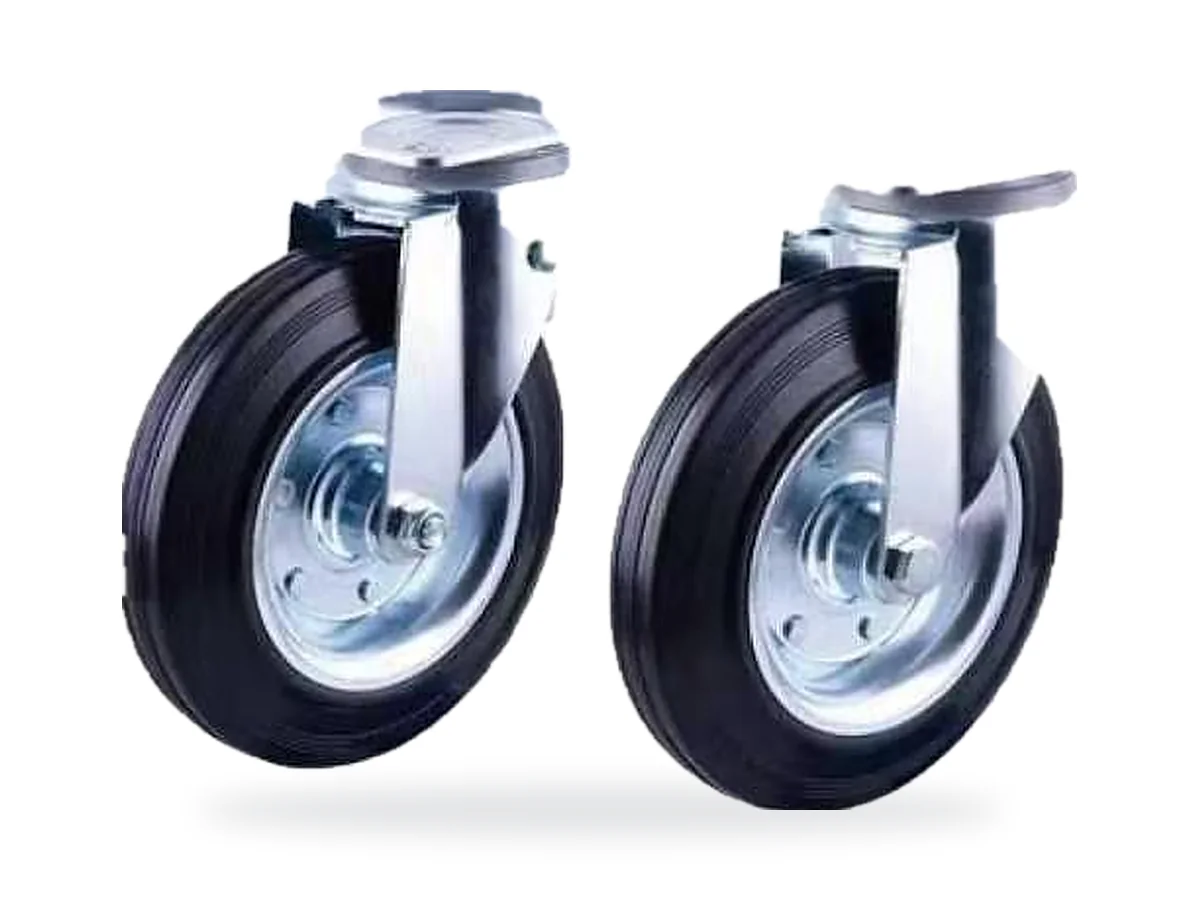
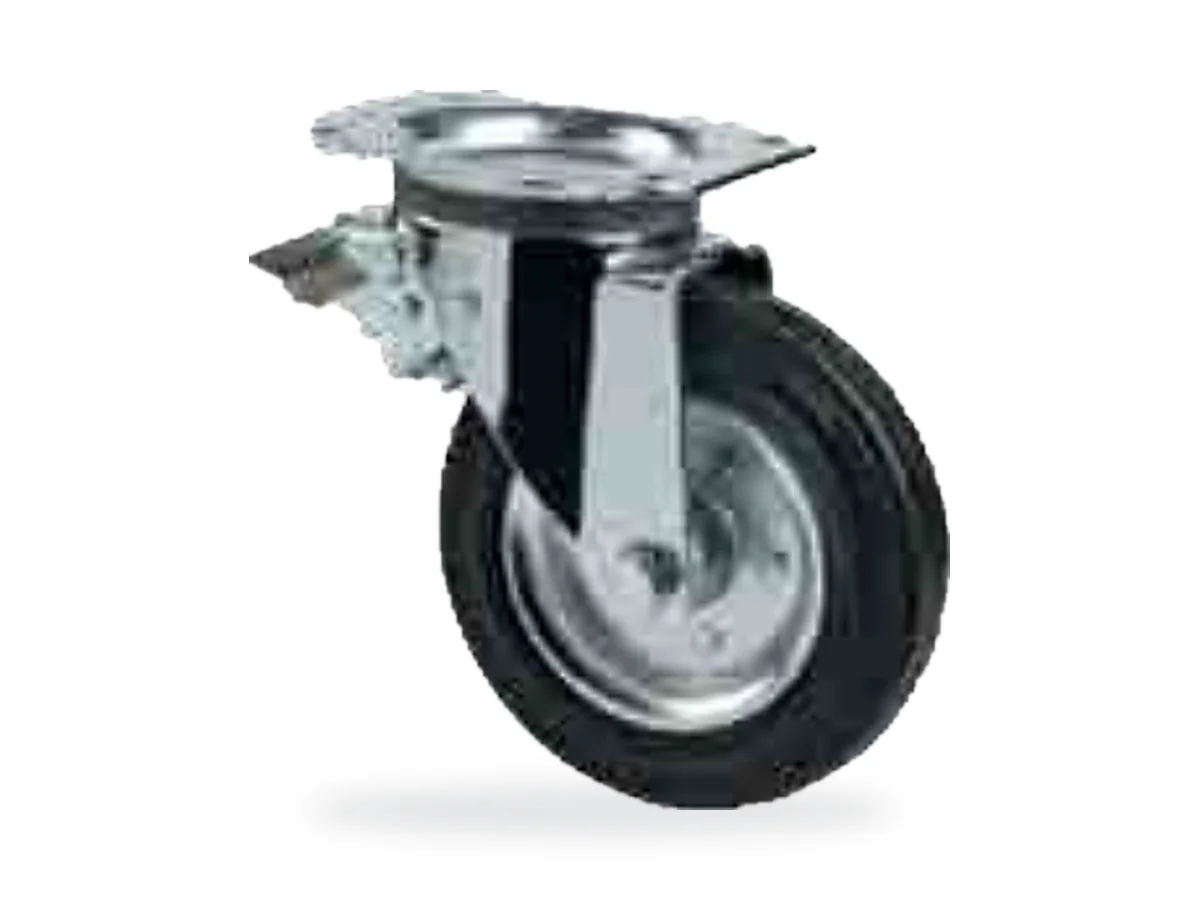
Bin Castor – Brake, Steel Hub (Leading or Trailing Brake)
Ø160 / 200 mm · Steel hub · Brake
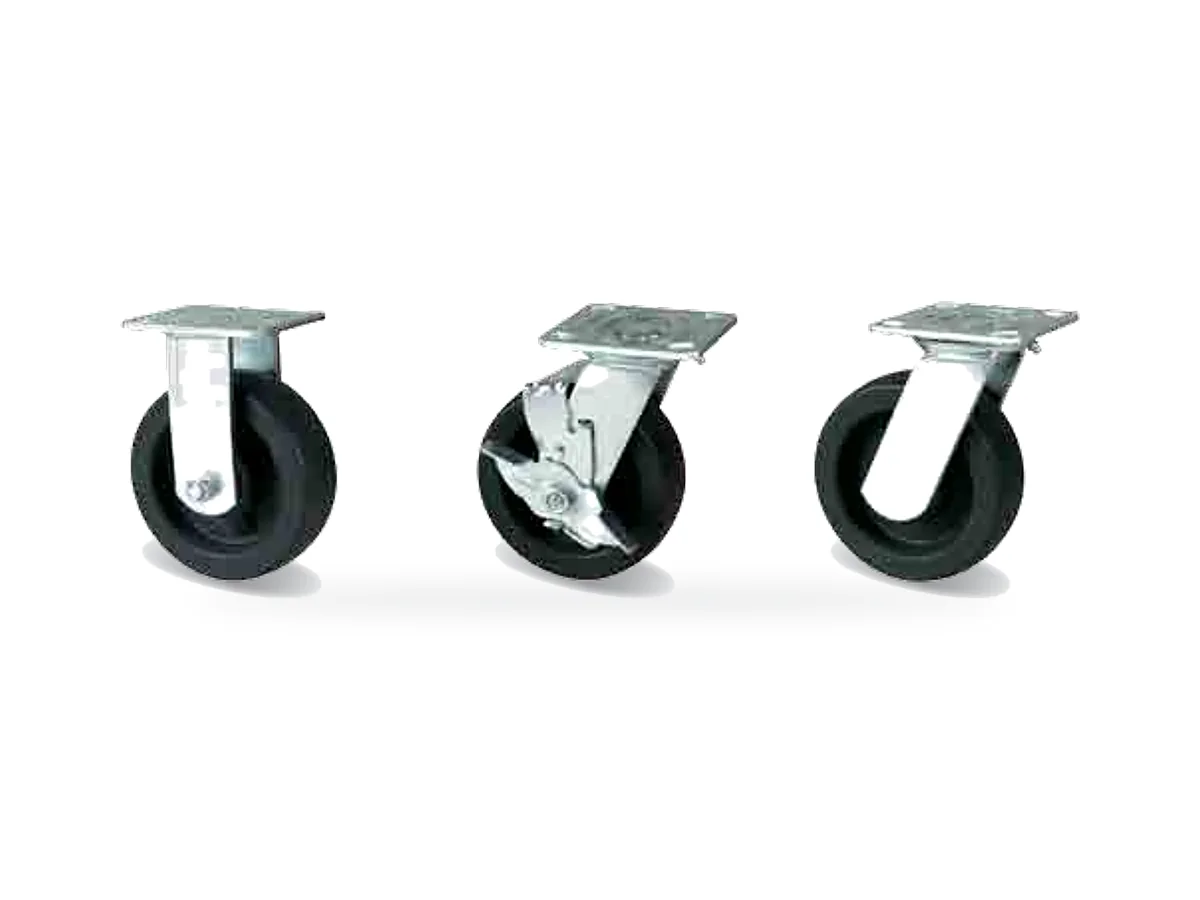
Bin Castors (660–1100L): FAQ
What castors does an 1100 litre bin use?
Usually four 200 mm castors to EN 840: two swivel and two swivel with total-lock brake, mounted on a top plate. We supply all four as a set.
Plastic hub or steel hub?
Plastic (polypropylene) hubs are lighter and can't rust. Steel hubs carry more load and handle impacts better — choose them for heavy commercial waste or long pulls.
What is a leading vs trailing brake?
It's where the brake pedal sits relative to the wheel. Leading-brake pedals face forward; trailing-brake pedals sit behind. Pick whichever matches your bin design and how operators approach it.
Reference: EN 840-5 – performance requirements and test methods for mobile waste containers · What EN 840 covers