Castor Brakes for Waste Containers: Types and Layouts
For most waste containers, castor brakes should be total-lock types fitted to two of the four castors. A total lock stops both the wheel and the swivel, so a full bin stays still on a slope. Add a directional lock for ramps, and pick a leading or trailing pedal to suit the bin.
Key takeaways
- A basic wheel brake stops the wheel from turning, but the swivel can still move a little.
- Total-lock castor brakes stop the wheel and the swivel together, which suits loaded bins on slopes.
- A directional lock fixes the swivel so the castor tracks straight on ramps and during transport.
- Leading and trailing brakes differ only in where the pedal sits, so pick the one crews can reach.
- Two braked castors plus two swivel castors is the usual layout for 660L to 1100L bins.
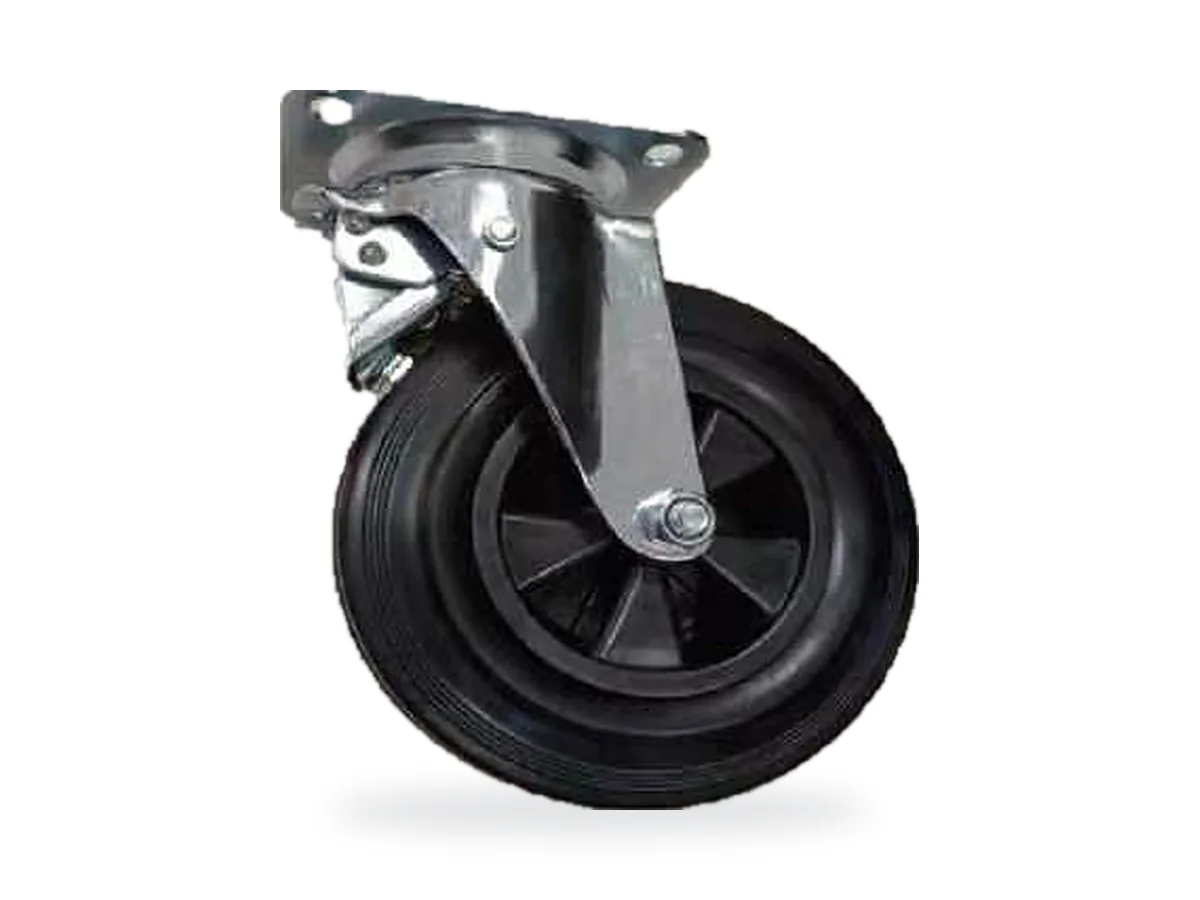
Why Castor Brakes Matter on Waste Containers
A loaded four-wheel bin is heavy. For example, Wealden District Council lists a maximum load of 440 kg for an 1100 litre bin. On a slope, that weight wants to roll.
So castor brakes do two jobs. First, they hold the bin still in a store, at the kerb or in a loading bay. Second, they stop a container from drifting while a crew opens the lid or hooks it to the lift.
Many councils specify brakes as standard. For instance, Nottingham City Council describes its 770 and 1100 litre bins as containers on four castors with brake control.
Choosing the right brake type, though, takes a little more thought. The sections below explain each option in plain terms.
The Basic Wheel Brake
A basic brake presses on the wheel so it cannot turn. It is simple and cheap, and it suits light carts on flat floors.
However, it leaves the swivel free. As the caster article explains, a basic brake stops wheel rotation, but the fork can still swivel slightly. On a loaded bin, that small movement lets the container shift when someone leans on it.
For that reason, we rarely recommend a basic wheel brake on large waste containers. The other castor brakes in this guide hold better under load.
Total-Lock Castor Brakes
A total lock stops the wheel and the swivel with a single pedal. Once engaged, the castor acts like a solid foot.
Our braked bin castors use this design. Both the polypropylene-hub and the steel-hub versions carry a total-lock brake, in 160 mm and 200 mm sizes.
As a result, a full 1100 litre bin stays put on a sloping bin store, a kerb or a ramp. Crews can open the lid and load the bin without it creeping away.
Total-lock castor brakes also work well in bin stores with tight spaces. Since the swivel cannot turn, a parked bin keeps its position and does not swing into the next one.
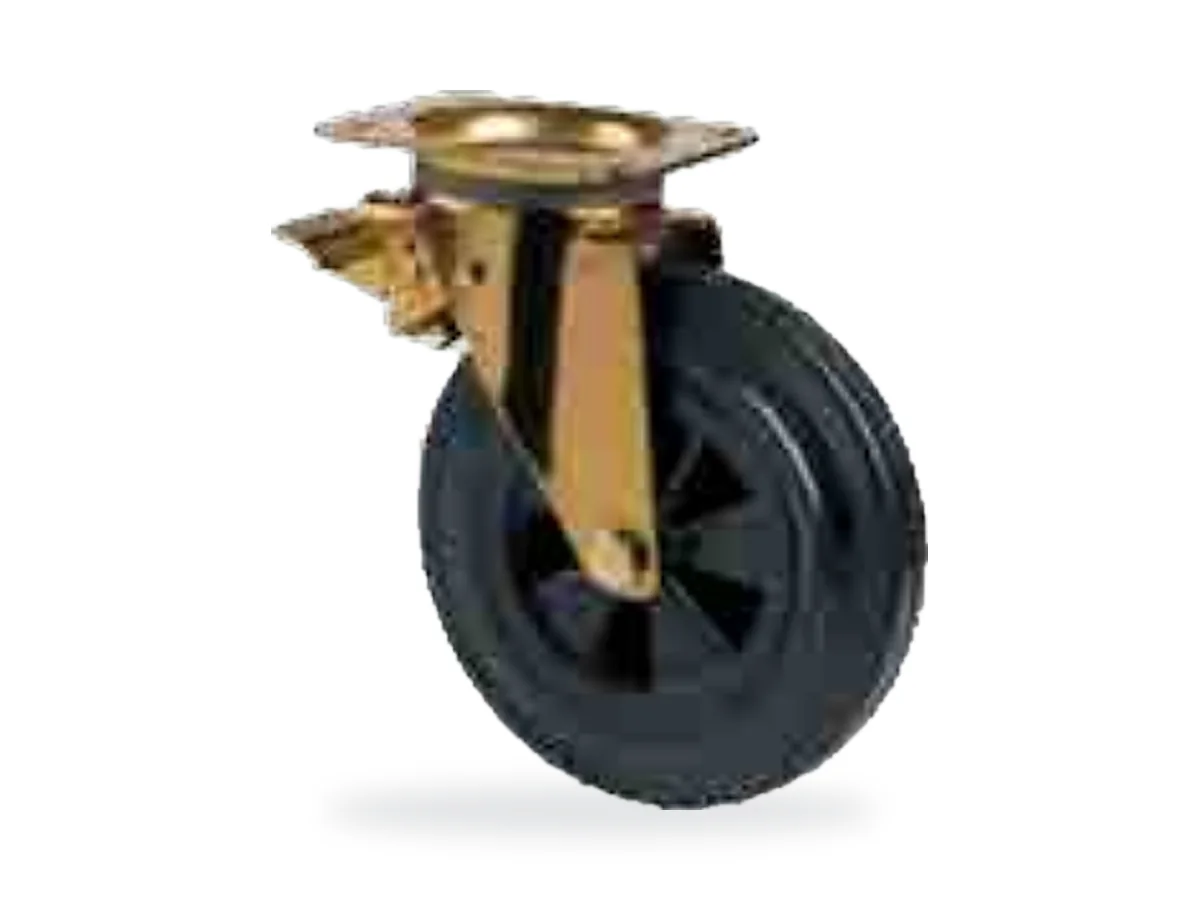
Directional Locks Keep Bins Straight
A directional lock solves a different problem. Instead of stopping the bin, it fixes the swivel so the castor rolls in a straight line.
According to the same caster article, locking only the swivel shaft turns a swivel castor into a directional one. In practice, that stops a bin from slewing sideways.
Our directional lock uses a Y-shaped bracket with a gold zinc finish. It keeps containers tracking straight on ramps and during transport, and it holds them in position when parked.
Pair a directional lock with total-lock castor brakes where bins travel on vehicles, along narrow aisles or up loading ramps.
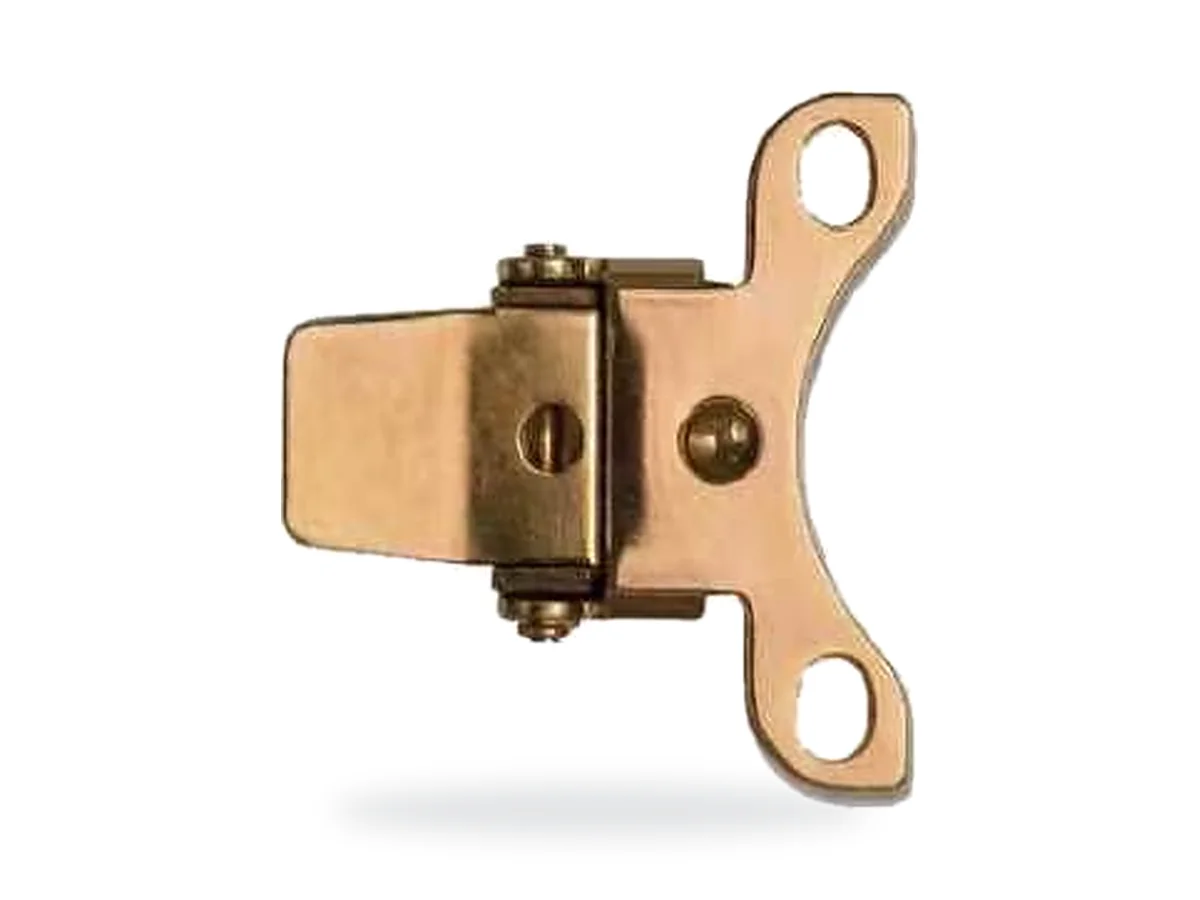
Leading or Trailing Brake Pedals
Leading and trailing brakes work the same way inside. The difference lies in where the pedal sits relative to the swivel.
On a leading brake, the pedal sits on one side of the swivel axis. On a trailing brake, it sits on the other. So the choice depends on your bin design and on where crews stand when they park the bin.
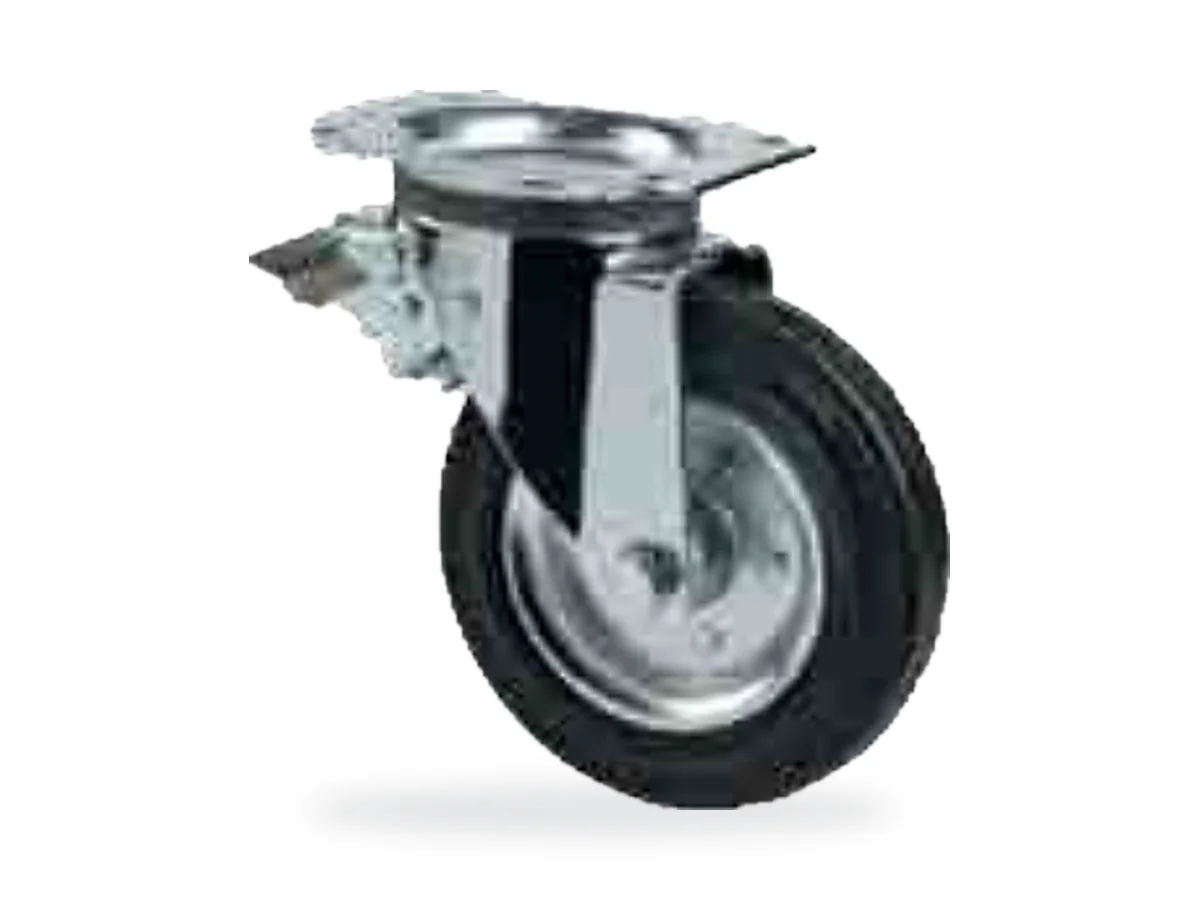
Our steel-hub braked castor comes in both layouts. That lets bin makers put the pedal where a foot can reach it easily, without a crew member stepping into the path of the bin.
Compare the Options
This table sums up the four types of castor brakes and locks. Use it to shortlist the right one for each site.
| Type | Stops | Best use |
|---|---|---|
| Wheel brake | Wheel only | Light carts on flat floors |
| Total lock | Wheel and swivel | Loaded bins on slopes |
| Directional lock | Swivel only | Ramps, vehicles, aisles |
| Leading / trailing | Wheel and swivel | Pedal placement |
The Safe Layout for 660L to 1100L Bins
Most four-wheel bins run on two swivel castors and two braked castors. That mix keeps the bin easy to steer while still holding it firmly when parked.
Place the braked castors on the side crews stand when they park the bin. Then they can engage both pedals without walking around the container.
If bins travel on vehicles or ramps, add a directional lock to one or both swivel castors. Meanwhile, keep at least two castors free to swivel for manoeuvring in normal use.
Castor Brakes and Crew Safety
Brakes protect crews as well as bins. HSE notes that musculoskeletal disorders make up roughly a third of injuries in the waste industry, and its waste guidance links most of them to collection work.
A bin that rolls away forces a sudden pull or catch. So working castor brakes reduce those jerky movements. HSE's RAPP tool and its pushing and pulling guidance help employers assess wheeled loads like these.
Also, keep pedals clean. Grit and old food waste build up around the brake and stop it from engaging fully, especially in winter.
Bin stores raise other safety issues too. For example, HSE guidance on collecting waste warns that people sometimes shelter in large commercial bins. Locked lids and secure stores reduce that risk alongside good brakes.
Castor Brakes for Different Sites
The right castor brakes depend on where bins live and how far they travel. So start with the site, not the catalogue.
- Flat indoor bin rooms: total-lock castor brakes on two castors keep bins in their bays.
- On sloping streets and car parks, fit total locks and check them often, because a parked bin on a slope relies on them completely.
- Loading ramps and vehicle beds call for a directional lock as well, since it stops bins from swinging sideways.
- Busy commercial yards suit steel-hub braked castors, which take harder knocks from forklifts and kerbs.
In addition, ask the crews. They know which corners, slopes and doorways cause trouble, and their answers often decide the pedal side and the number of brakes.
Common Castor Brake Problems
Most brake faults build up slowly. Spot them early and you avoid a runaway bin.
- Pedal will not click down: grit or old waste has packed around it, so clean it out.
- If the bin still creeps, the brake pad has worn or the wheel has a flat spot, so replace the castor.
- Swivel turns while braked: the castor has only a wheel brake, so upgrade to a total lock.
- A pedal that sits out of reach usually means the wrong layout, so switch between leading and trailing models.
Also watch for bent pedals. Kerbs and lifts can strike a low pedal, and a bent one may engage only halfway.
Retrofitting Castor Brakes on Existing Bins
Older bins often run on four swivel castors with no brakes at all. Fortunately, you can usually upgrade them without replacing the bin.
First, measure the top plate and its hole pattern on the existing castors. Then order braked castors with the same plate, wheel size and overall height, so the bin stays level.
Next, replace two castors on the same side with total-lock models. After that, fit new nuts and washers, because old fasteners often carry rust.
Finally, test the bin on the steepest slope it will meet. If it still creeps, check the floor and the load before you add more brakes.
Small Containers Need Brakes Too
Smaller containers of about 30 to 120 litres usually run on 160 mm castors. They suit offices, public areas and indoor bin rooms.
Even so, small bins can roll away on a smooth floor or a ramp. Our 160 mm braked castors use the same total-lock design as the 200 mm versions, so the same rules apply at a smaller scale.
How Brakes Affect Steering
Brakes change how a bin feels to push, even when they are off. That is because a total-lock castor is still a swivel castor, so it turns freely whenever the pedal is up.
A swivel castor needs a small offset so the wheel trails behind the direction of travel, as the caster article describes. A good brake design keeps that offset, so the bin still steers smoothly.
Where you place the braked castors matters too. With both brakes on one side, a crew can park the bin with two quick taps of the foot, and the other side stays free to swing into position.
Finally, never fit brakes to all four castors unless a site truly needs it. Four brakes make parking slower, and crews tend to skip the ones they cannot reach.
Testing and Maintaining Castor Brakes
Test castor brakes at every routine service. Engage each pedal, then push the bin firmly from several sides.
- Wheel check: the wheel should not turn with the pedal down.
- On total locks, the swivel should not turn either.
- Pedal check: it should click firmly into place and release cleanly.
- Look for cracks in the housing or a bent pedal after impacts.
If a brake fails any check, replace the castor rather than the pedal alone. A worn brake usually sits on a castor with other wear as well.
Our bin maintenance checklist sets out a full service routine, and the castor range lists every braked model we make.
Standards for Castors and Containers
Four-wheel containers follow the EN 840 series. EN 840-2 covers flat-lid containers up to 1 300 litres, and EN 840-4 covers containers up to 1 700 litres.
In addition, EN 840-5 sets performance requirements and test methods, while EN 840-6 covers safety and health requirements.
For the castors themselves, ISO 22883 sets requirements for castors and wheels on manually pushed or power-towed industrial equipment up to 1.1 m/s, or 4 km/h. Our castors and wheels carry EN 840 certification.
Ordering Castor Brakes
Send us four details to get an accurate quote quickly. First, the bin size. Second, the wheel diameter and hub type. Third, the brake type and pedal side. Fourth, whether you need directional locks.
We then confirm the specification with a drawing before production. For new bin models, we also supply samples, so you can test the castor brakes on your own slopes and floors.
For help choosing the castor itself, read our guide to castors for 660L and 1100L bins.
Key Terms Explained
- Wheel brake
- A brake that presses on the tread or hub so the wheel stops turning. It does not stop the fork from swivelling.
- Total lock
- This brake locks the wheel and the swivel head together with one pedal.
- Directional lock
- This device fixes the swivel in one direction, so a swivel castor rolls straight like a fixed one.
- Leading brake
- A layout where the pedal sits on the leading side of the swivel. A trailing brake places it on the other side.
- Swivel offset
- The small distance between the swivel axis and the wheel axle that lets the wheel trail behind the direction of travel.
Castor Brakes: Questions and Answers
How many castor brakes does an 1100 litre bin need?
Usually two. Most 660L to 1100L bins run on two swivel castors and two braked castors, which holds the bin still without making it hard to steer.
What is the difference between a brake and a total lock?
A basic brake only stops the wheel turning, so the fork can still swivel slightly. A total lock stops the wheel and the swivel at once.
When do I need a directional lock?
Fit one when bins travel on ramps, on vehicles or in narrow aisles. It stops the castor from slewing sideways and keeps the bin tracking straight.
Do castor brakes wear out?
Yes. Pedals, springs and brake pads wear with use and grit. So test every brake during routine services and replace castors that no longer hold.
Sources
- HSE: Risk assessment of pushing and pulling (RAPP) tool, INDG478
- HSE: Pushing and pulling loads: overview
- NSAI Standards: EN 840-5, performance requirements and test methods
- HSE: Musculoskeletal disorders in waste management
- Wikipedia: Caster, encyclopedia article
- ISO: ISO 22883:2004, castors and wheels up to 1.1 m/s (4 km/h)
- BSI Knowledge: BS EN 840-2, 4-wheel containers up to 1 300 l with flat lids
- iTeh Standards: EN 840-4:2020, 4-wheel containers up to 1 700 l
- NSAI Standards: BS EN 840-6, safety and health requirements
- Nottingham City Council: Commercial wheeled bin sizes
- Wealden District Council: Bin sizes and maximum loads
- HSE: Collecting waste and recyclables
Product figures come from the Plastic MGB catalogue. Our editorial standards explain how we check facts and fix mistakes.