 Zhongshan Horns Metal Processing
Choosing Castors for 660L and 1100L Bins
Most 660L and 1100L bins run on four 200 mm bin castors: two swivel and two with a total-lock brake. Choose a polypropylene hub for light, rust-free bins, or a pressed steel hub for heavy loads and long pulls. Smaller containers of 30 to 120 litres use 160 mm castors instead.
Key takeaways
- Use 200 mm bin castors for 660L, 770L and 1100L containers, and 160 mm castors for small 30 to 120 litre containers.
- A typical set is two swivel castors plus two total-lock braked castors.
- Polypropylene hubs stay light and cannot rust, while steel hubs carry more load and take harder knocks.
- Check the housing, the swivel bearing and the dust cover, not just the wheel.
- Bolt castors on with galvanised or stainless M6 to M12 fasteners, and use anti-loosening nuts where vibration is high.
Why Castor Choice Matters on Big Bins
A four-wheel bin carries far more than a household wheelie bin. For example, Wealden District Council lists a maximum load of 264 kg for a 660 litre bin and 440 kg for an 1100 litre bin.
All of that weight rides on four bin castors. They roll the bin out of a store, across a yard and up to the lorry, often several times a week. So a weak castor shows up quickly as a stuck wheel, a broken fork or a bin that runs away on a slope.
Size also plays a part. Croydon Council gives an 1100 litre bin as 1.40 m high, 1.26 m wide and 1.00 m deep. A container that large needs castors that steer well and stop firmly.
Pick the Wheel Size: 200 mm or 160 mm
Use 200 mm bin castors for 660L, 770L and 1100L containers and for heavy carts. So the larger wheel on these bin castors rolls over kerbs, drains and gaps more easily.
As the caster article explains, bigger wheels bridge rough surfaces better, but they need a taller fork and sweep more space when they swivel. That trade-off is why small containers use a smaller wheel.
For containers of about 30 to 120 litres, used in offices and public areas, 160 mm castors suit better. They keep the bin low and compact, and the loads are much lighter.
| Feature | Options | Best for |
|---|---|---|
| Wheel diameter | 200 mm | 660–1100L bins, heavy carts |
| Wheel diameter | 160 mm | 30–120L containers |
| Wheel centre | Polypropylene | Light, rust-free bins |
| Wheel centre | Pressed steel | Heavy loads, long pulls |
| Wheel centre | Polyamide | Heavy duty castors |
| Brake | Total lock | Slopes and loading bays |
Choose the Hub: Plastic or Steel
The hub, or wheel centre, carries the load from the tread to the bearing. Our range offers three materials, each with a clear job.
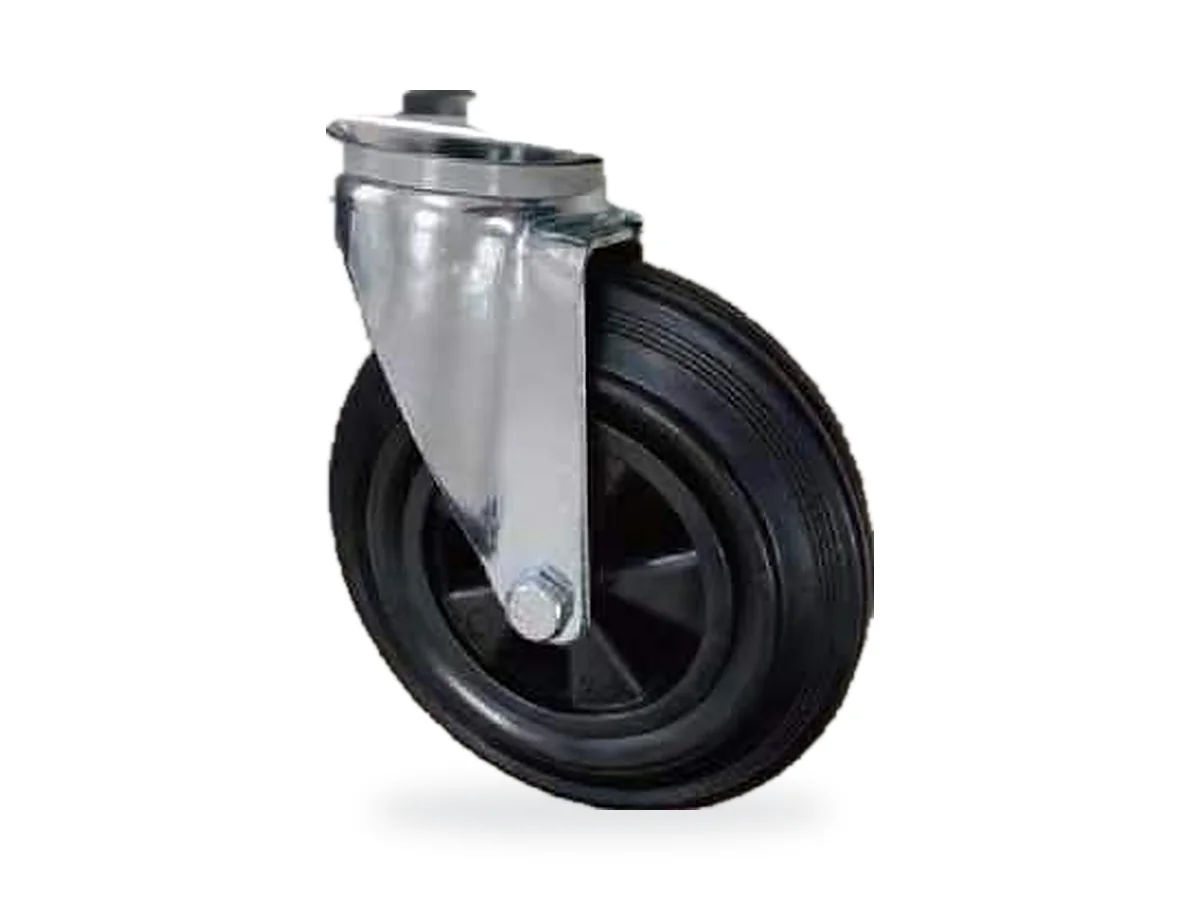
First, polypropylene hubs are light and cannot rust. They are our most popular choice, because they suit the wet, dirty base of a bin that a crew washes and moves every week.
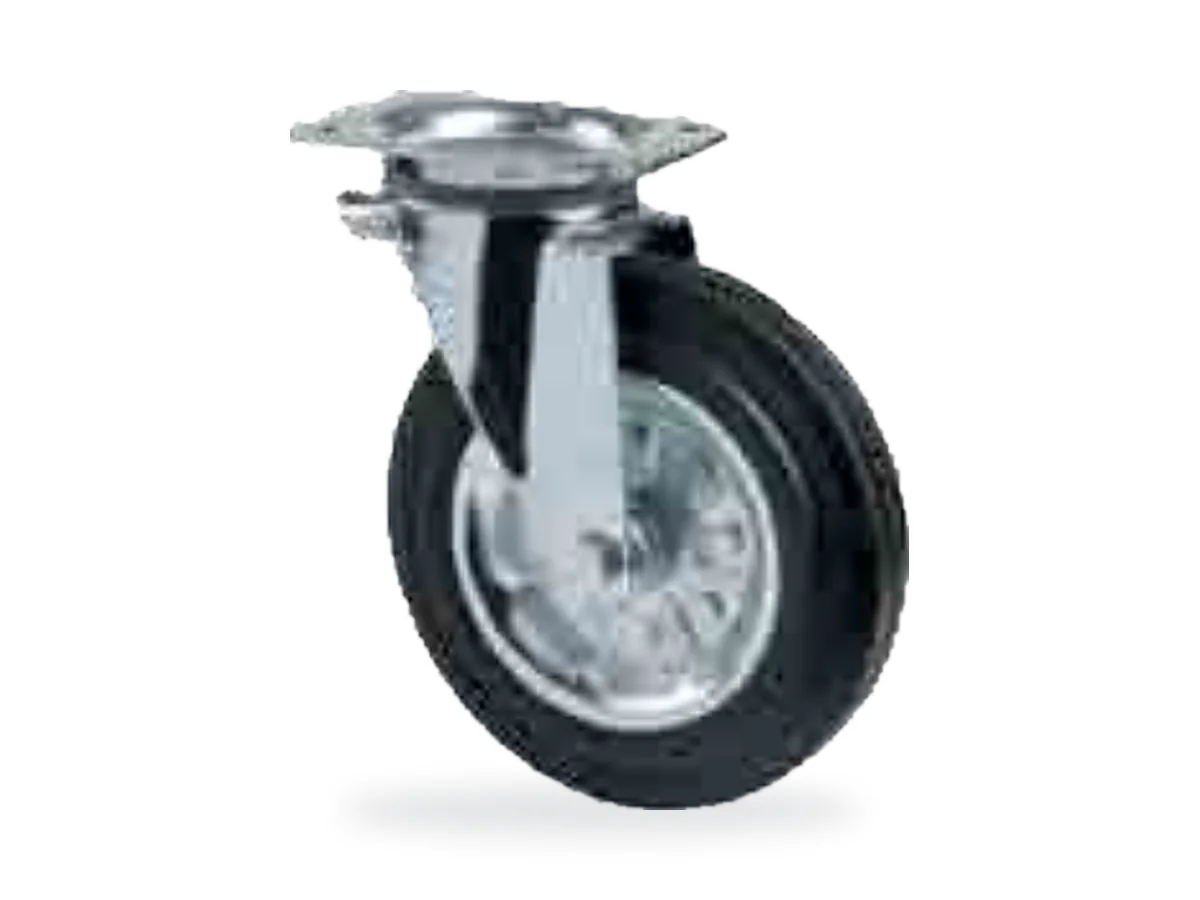
Second, pressed steel hubs give higher load capacity and more impact resistance. Choose them for commercial bins that travel long distances or that heavy collection vehicles tip.
Third, our heavy duty castor uses a polyamide centre on precision ball bearings, inside a reinforced pressed steel fork. It suits the heaviest containers and handling equipment.
For a deeper comparison of treads and hubs, see our guide to castor wheel materials.
Set the Mix: Swivel and Braked Bin Castors
A typical four-wheel bin runs on two swivel castors and two braked castors. The swivels let the bin turn, and the brakes hold it still at the kerb or in a store.
Our braked castors use a total-lock brake. According to the caster article, a total lock stops both the wheel and the swivel, while a basic brake only stops the wheel. So a full 1100 litre bin stays put on a sloping bin store.
Commercial bins in many cities follow this layout. For example, Nottingham City Council describes its 770 and 1100 litre bins as lockable containers on four castors with brake control.
Pedal position on bin castors matters too. Our steel-hub braked castor comes with a leading or a trailing brake, so the pedal sits where operators can reach it. Our castor brake guide compares every option.
Check the Construction, Not Just the Wheel
Two bin castors can look alike in a photo yet last very different lengths of time. So check the parts around the wheel as well.
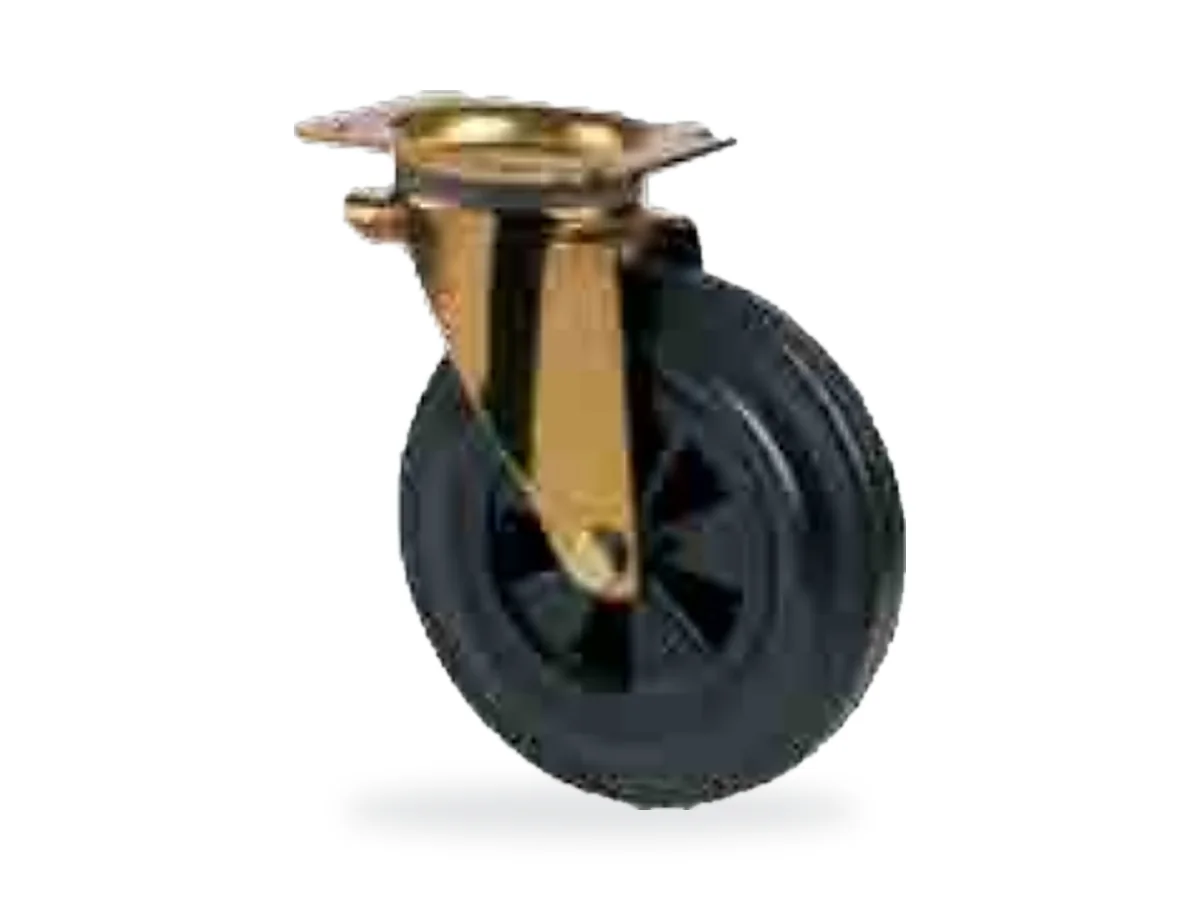
- Housing: pressed steel with bright zinc plating, or yellow zinc on request, resists rust and knocks.
- A ball-bearing swivel head lets the fork turn smoothly under load.
- Dust cover: it keeps grit and washing water out of the swivel bearing.
- Roller bearings in the wheel cut rolling friction and carry heavy radial loads.
- Top plate and lock nut: the plate bolts to the bin base, and the axle nut stays tight.
Roller bearings deserve a note. As the rolling-element bearing article explains, roller bearings generally carry heavier radial loads than ball bearings and roll with very little friction. As a result, bin castors with roller bearings make a loaded bin easier to start and to steer.
Fit Bin Castors Securely
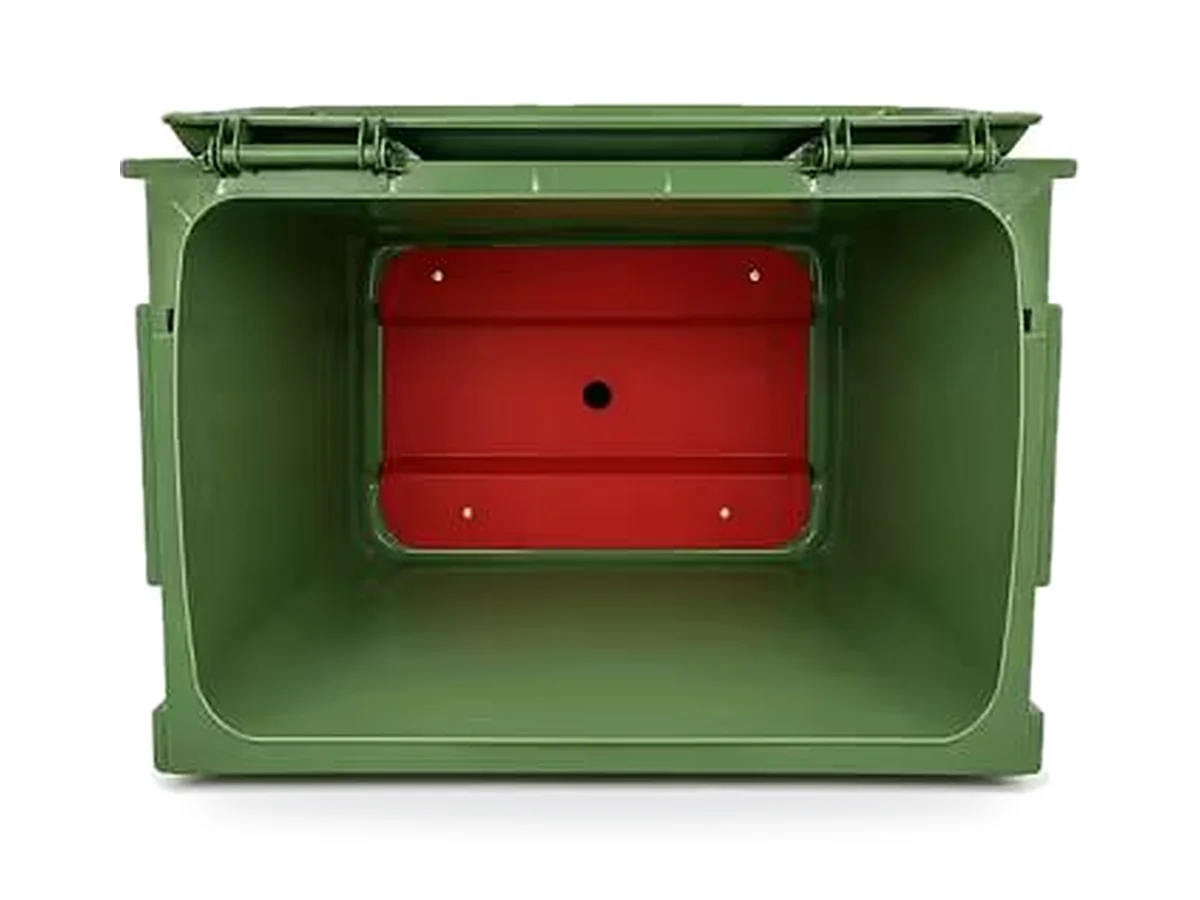
Bin castors bolt to the bin base through the top plate. That joint takes every bump, so the fasteners matter as much as the castor.
Use galvanised or stainless bolts, nuts and washers. M6 to M12 sizes are common, and anti-loosening nuts help where bins see constant vibration on rough ground.
Next, check the base. A cracked or worn base lets the plate move, and no castor will fix that. Our baseplates for four-wheel bins reinforce this area on new builds and repairs.
How Bin Castors Wear Out
Bin castors rarely fail all at once. Instead, they wear in small steps, and each step makes the bin a little harder to move.
First, the tread can pick up flat spots when a loaded bin stands with its brakes on for long periods. Then grit works into the swivel head, so the fork turns stiffly and the bin pulls to one side.
After that, the wheel bearing starts to rumble, and the brake pedal loses its grip. Finally, a weakened fork or a loose top plate can let a castor fold under load.
Because of this, inspect bin castors on a schedule rather than waiting for a breakdown. A quick spin of each wheel and a push on each brake pedal takes seconds per bin.
Bin Castors for Different Sites
No single set of bin castors suits every site. So match the castor to the ground, the load and the cleaning routine.
- Smooth bin stores and car parks: polypropylene-hub bin castors keep weight down and never rust.
- For long pulls across rough yards, steel-hub bin castors take the knocks and carry more load.
- Hospitals, food plants and other washdown sites need a dust cover on the swivel head, since washing water carries grit into the bearing.
- On sloping streets and loading bays, a total-lock brake on two of the four bin castors keeps a full container still.
Also, think about how often crews move each bin. A container that travels every day earns better castors than one that moves once a week.
Replacing Bin Castors on Existing Bins
Many contractors replace bin castors on bins already in service. That makes sense, because the bin body usually outlasts its wheels by years.
Start by measuring the top plate and its hole pattern. Then check the wheel size and the overall height, since a taller castor changes how the bin meets the lifting device on the lorry.
Next, replace castors in matched pairs at least. For example, swap both braked castors together, so the bin does not lean or pull to one side.
Finally, fit new nuts and washers. Old fasteners often carry rust or stretched threads, and they cost very little to replace while the bin lies on its side.
Ordering Bin Castors in Volume
Bin makers and councils usually buy bin castors by the thousand. At that scale, consistency matters more than any single feature.
So agree a drawing for each castor type and keep it on file. We then build every batch to that drawing, including the plate, the wheel, the brake and the finish.
In addition, ask for samples before the first full order. Fit them to a real bin, load it, and roll it over your roughest ground. Once the sample passes, the specification stays fixed for later orders.
Finish and Colour Options
Most housings leave our factory with bright zinc plating, which gives a clean silver look and good rust protection for outdoor use.
Some buyers prefer yellow zinc instead. It has a gold tone, and many fleets use it so their containers stand out at a shared depot.
Either way, the plating protects the pressed steel under it. However, deep scratches from kerbs and forks can expose bare steel over time, so check housings for rust spots during routine services.
For coastal sites, ask about stainless fasteners as well. That way, the bolts holding the plate do not rust long before the castor itself wears out.
Know the Standards
The EN 840 series covers mobile waste containers. EN 840-2 sets the dimensions and design of four-wheel containers up to 1 300 litres with flat lids, and EN 840-3 covers the dome-lid version.
Larger flat-lid containers up to 1 700 litres fall under EN 840-4. In addition, EN 840-5 sets the performance requirements and test methods, and EN 840-6 covers safety and health.
Bin castors also have their own standard. ISO 22883 sets requirements for castors and wheels on manually pushed or power-towed industrial equipment up to 1.1 m/s, or 4 km/h. Our castors and wheels are made to EN 840.
The lift side matters as well. EN 1501-5 covers the lifting devices on refuse collection vehicles that empty EN 840 containers, so your bin, its castors and the lorry all need to work together.
Think About the Crew
Crews push and pull these bins by hand, often on uneven ground. So rolling resistance is not just a comfort issue but a safety issue too.
HSE offers a free RAPP tool for assessing pushing and pulling. Its guidance on pushing and pulling helps employers spot high-risk tasks and check that controls work.
Good bin castors help here, too. Larger wheels, smooth bearings and working brakes all reduce the force a crew needs to start, steer and stop a loaded bin.
In practice, check worn bin castors at every service. A flat-spotted tread or a stiff swivel makes a loaded bin much harder to move across a yard.
Five Questions Before You Order
- Bin size: is it a 660L, 770L, 1100L or a small container?
- Which hub suits the load: polypropylene, pressed steel or polyamide?
- How many brakes, and do you need a leading or a trailing pedal?
- Top plate: what hole pattern and bolt size does the bin base use?
- Finish: do you want bright zinc or yellow zinc on the housing?
With those answers, we can match bin castors to your design quickly. You can also browse the full castor range and the fastener range first.
Key Terms Explained
- Swivel castor
- A castor whose fork turns through a full circle, so the bin can change direction.
- Total lock
- This brake stops the wheel from turning and the fork from swivelling at the same time.
- Directional lock
- A lock that fixes the swivel in one direction, so the castor rolls straight like a fixed one.
- Top plate
- The flat steel plate on top of the castor that bolts to the bin base.
- Roller bearing
- Small cylinders inside the wheel hub that reduce friction and carry heavy radial loads.
Bin Castors: Questions and Answers
What bin castors does an 1100 litre bin need?
In most cases, four 200 mm EN 840 castors: two swivel and two with a total-lock brake. Match the top plate to the holes on your bin base.
Plastic or steel hub castors?
Polypropylene hubs weigh less and cannot rust. Steel hubs carry more load and take harder knocks, so choose them for heavy commercial waste and long pulls.
What is the difference between a leading and a trailing brake?
It describes where the brake pedal sits relative to the swivel. Pick the layout that puts the pedal where operators can reach it on your bin design.
Do small bins use the same bin castors?
No. Small containers of about 30 to 120 litres usually run on 160 mm castors, which suit offices and public areas.
Sources
- iTeh Standards: EN 840-4:2020, 4-wheel containers up to 1 700 l
- NSAI Standards: EN 840-5, performance requirements and test methods
- Wikipedia: Caster, encyclopedia article
- HSE: Risk assessment of pushing and pulling (RAPP) tool, INDG478
- BSI Knowledge: BS EN 840-2, 4-wheel containers up to 1 300 l with flat lids
- NSAI Standards: BS EN 840-6, safety and health requirements
- ISO: ISO 22883:2004, castors and wheels up to 1.1 m/s (4 km/h)
- HSE: Pushing and pulling loads: overview
- Wealden District Council: Bin sizes and maximum loads
- Croydon Council: Bin size and measurements (PDF)
- Nottingham City Council: Commercial wheeled bin sizes
- Wikipedia: Rolling-element bearing, encyclopedia article
- iTeh Standards: EN 1501-5:2021, lifting devices for refuse collection vehicles
Product sizes are typical; we confirm each order against your drawing or sample. Our editorial standards explain how we check facts and fix mistakes.