Wheelie Bin Sizes: 140L to 1100L Compared
Common wheelie bin sizes are 140, 180, 240 and 360 litres on two wheels, plus 660, 770 and 1100 litres on four castors. A 240 litre bin stands about 1.06 m high, 0.57 m wide and 0.72 m deep. Exact dimensions vary by maker, so councils publish their own figures.
Key takeaways
- Two-wheel bin sizes run from about 140 to 360 litres, while four-wheel containers run from 660 to 1100 litres and more.
- A typical 240 litre bin is about 1.06 m high, 0.57 m wide and 0.72 m deep, but each maker differs slightly.
- One council lists maximum loads from 48 kg for a 140 litre bin up to 440 kg for an 1100 litre bin.
- EN 840-1 covers two-wheel bins up to 400 litres, and EN 840-2 to EN 840-4 cover four-wheel containers.
- Most two-wheel bins use 200 mm wheels, while four-wheel containers usually run on 200 mm castors.
Why Bin Sizes Vary
Wheelie bin sizes describe volume in litres, not exact dimensions. So two 240 litre bins from different makers can differ by a few centimetres in height, width or depth.
Councils say this openly. For example, Islington Council notes that bin dimensions differ between manufacturers and that its table is only a guide. Similarly, Wealden District Council explains that its sizes vary slightly because it has used different makers over the years.
That matters when you plan a bin store, design a new bin or order parts. In each case, measure the actual bin rather than relying on the capacity alone.
Common Bin Sizes at a Glance
The table below uses figures from one council, so the sizes compare fairly. Other councils publish slightly different numbers for the same capacities.
| Capacity | H×W×D (mm) | Max load |
|---|---|---|
| 140 L | 1060×480×550 | 48 kg |
| 180 L | 1060×540×650 | 72 kg |
| 240 L | 1060×570×720 | 96 kg |
| 360 L | 1115×580×870 | 144 kg |
| 660 L | 1215×1370×770 | 264 kg |
| 1100 L | 1465×1370×1070 | 440 kg |
For the 770 litre size, Nottingham City Council lists 1310 mm high, 1260 mm wide and 785 mm deep. It describes both its 770 and 1100 litre containers as lockable bins on four castors with brake control.
Two-Wheel Bin Sizes: 140 to 360 Litres
Most households use two-wheel bins. The smaller bin sizes suit food waste, glass or small homes, while the larger ones take general waste or recycling for bigger households.
For example, a 140 litre bin is narrow, at about 480 mm wide in the Wealden figures. It suits tight front gardens and terraced streets.
After that comes the 240 litre bin, the most common household size in the UK. It stands about 1.06 m high, so it fits under most windows and in standard bin stores.
By contrast, a 360 litre bin adds depth rather than width. At about 870 mm deep in the Wealden table, it needs more room in a store, and it weighs more when full.
Weight differs a lot between these bin sizes. For instance, Buckinghamshire Council lists an empty 140 litre bin at 6.5 kg, a 240 litre bin at 9 kg and a 360 litre bin at 22.5 kg.
Four-Wheel Bin Sizes: 660 to 1100 Litres
Flats, offices, shops and restaurants usually use four-wheel containers. These larger bin sizes hold several times more waste and roll on castors instead of an axle.
First, a 660 litre container suits smaller blocks and businesses. Croydon Council gives 1.30 m high, 1.26 m wide and 0.72 m deep for its 660 litre bins.
Next, the 1100 litre container is the workhorse of commercial waste. Croydon lists it at 1.40 m high, 1.26 m wide and 1.00 m deep, while Wealden gives 1465 x 1370 x 1070 mm.
Those differences show again why capacity is only a starting point. Always measure the containers your crews actually use before you plan a store or a lift.
How Many Bags Fit in Each Size?
Bag counts also give a practical feel for each capacity. Wealden District Council publishes these rough figures:
- 140 litre bin: about 2 to 3 bags.
- A 180 litre bin takes about 3 to 4 bags.
- 240 litre bin: about 4 to 5 bags.
- For a 360 litre bin, expect about 5 to 6 bags.
- 660 litre container: about 10 to 12 bags.
- An 1100 litre container holds about 15 to 18 bags.
Bag sizes vary, of course, so treat these as rough guides. Still, they help when you plan collection frequency for a block of flats or a business.
Bin Sizes and the EN 840 Standard
The EN 840 series covers mobile waste containers in all these bin sizes. EN 840-1 sets the dimensions and design of two-wheel containers up to 400 litres for comb lifting devices.
For four-wheel containers, EN 840-2 covers flat-lid versions up to 1 300 litres, and EN 840-3 covers the dome-lid version. Larger flat-lid containers up to 1 700 litres fall under EN 840-4.
In addition, two further parts apply to every size. EN 840-5 sets the performance requirements and test methods, while EN 840-6 covers safety and health.
Councils often require compliance. For example, Islington asks residents to buy only bins that meet EN 840-1, in 240 or 360 litre bin sizes.
| EN 840 part | Covers | Typical sizes |
|---|---|---|
| EN 840-1 | 2-wheel, up to 400 L | 140 to 360 L |
| EN 840-2 / -3 | 4-wheel, up to 1 300 L | 660, 770, 1100 L |
| EN 840-4 | 4-wheel flat lid, up to 1 700 L | Larger containers |
| EN 840-5 / -6 | Tests, safety and health | All sizes |
Bin Sizes and Collection Vehicles
Bin size also decides how a lorry lifts and empties each container. Two-wheel bins under EN 840-1 hang on a comb lift by their front rim.
However, larger four-wheel containers usually use trunnions on their sides, or a wide comb, depending on the design. So the vehicle's lift has to match the bin sizes on its round.
EN 1501-5 sets the safety requirements for lifting devices on refuse collection vehicles. It covers lifts that empty containers made to the EN 840 series, among others.
For bin makers, this means every size in a range must meet the same lift dimensions as competing bins. Otherwise, councils cannot empty them with their existing fleet.
Choosing the Right Bin Sizes
First, start with the waste, not the bin. Work out how much each household or business produces between collections, then add a margin for busy weeks.
Next, check space. A bin store needs room to open lids fully and to wheel each container out without moving the others.
Then think about weight and slopes. Heavier bin sizes need firm, level paths, and four-wheel containers need working brakes on any slope.
Finally, check the lift type with your collection service. The best bin is no use if the lorry cannot tip it.
Parts That Change With Bin Size
Wheels, axles and castors all scale with bin sizes. Getting them right keeps every container rolling and lifting safely.
- Two-wheel bins usually run on 200 mm wheels; Buckinghamshire lists 200 for its 140, 240 and 360 litre bins.
- Axles change length with bin width, for example 480 mm or 550 mm in our range.
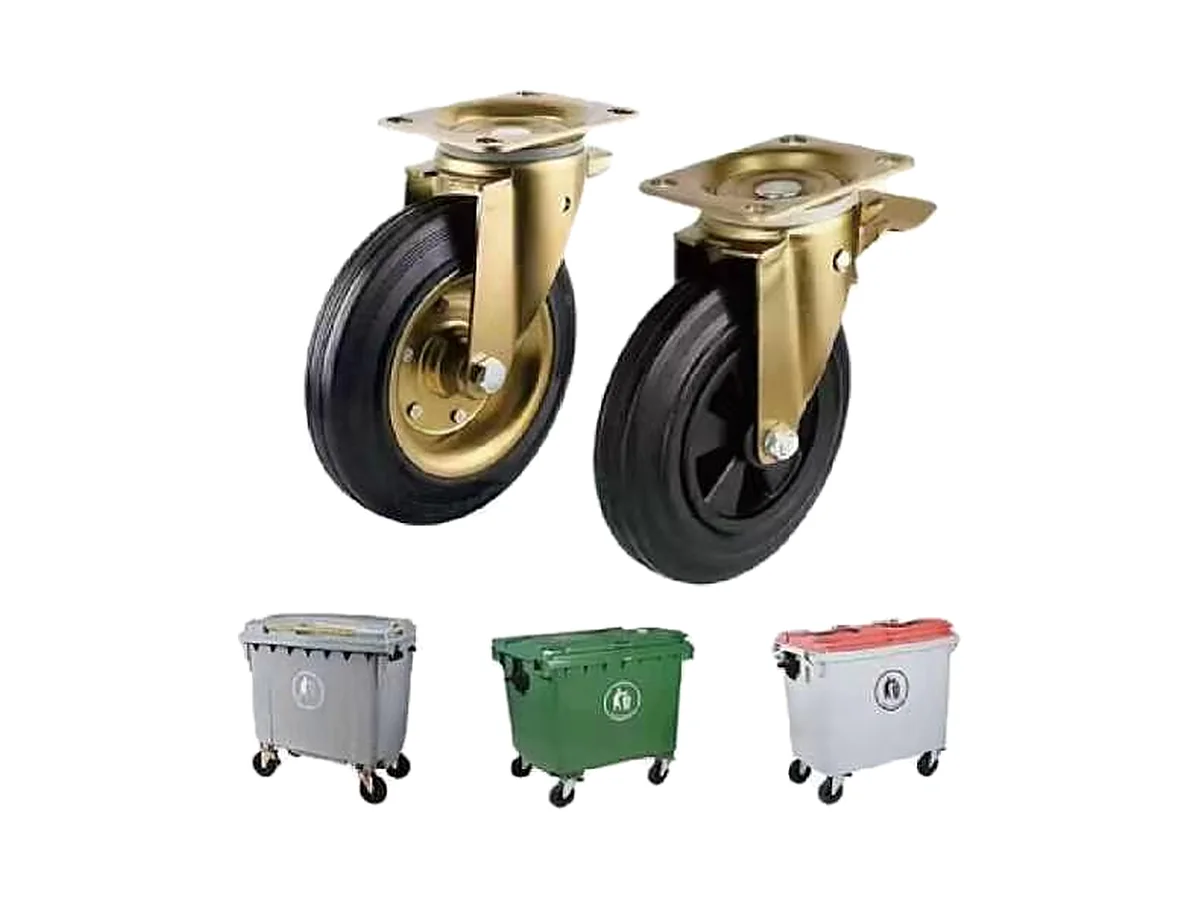
- Four-wheel containers from 660 to 1100 litres usually use 200 mm castors, two of them braked.
- Smaller containers of about 30 to 120 litres often use 160 mm castors instead.
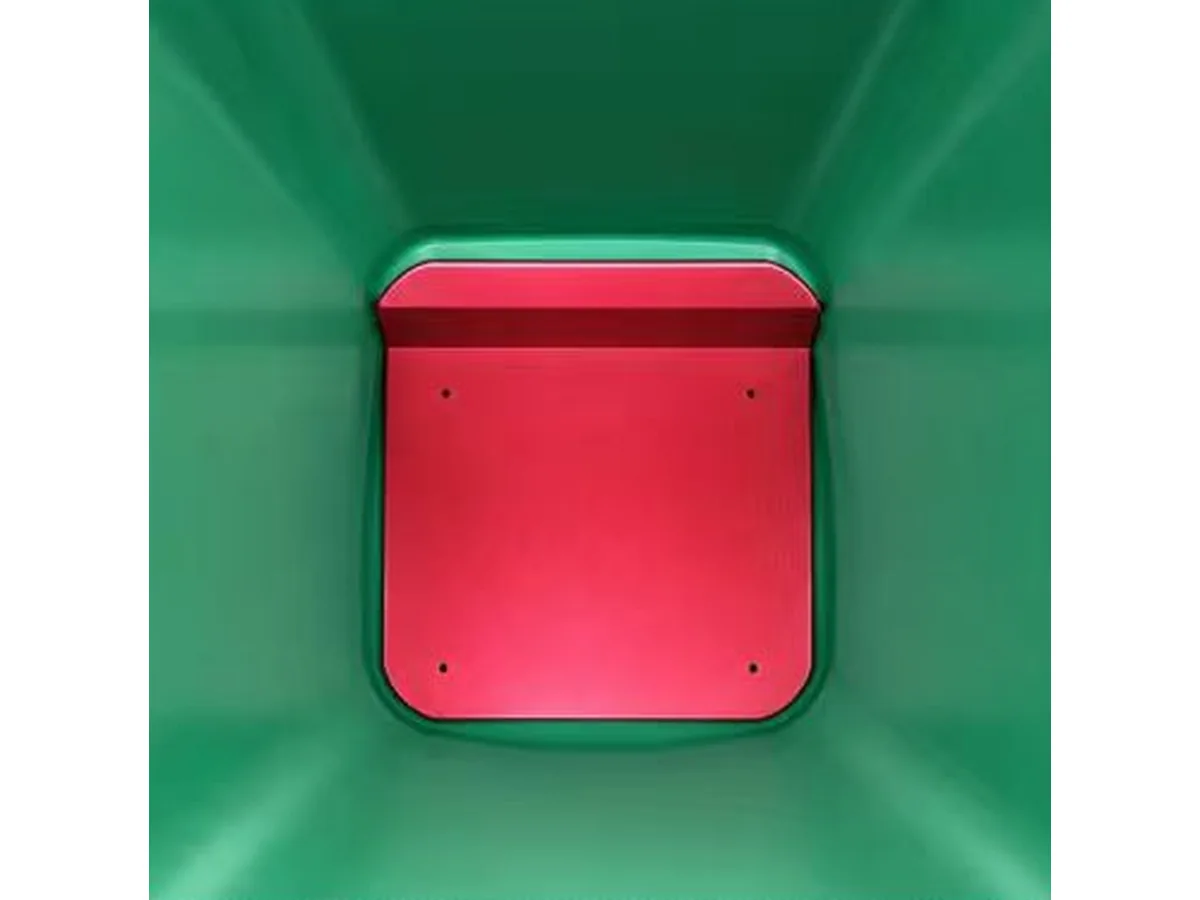
- Large containers benefit from a baseplate and a drain cap for washing out.
Our castor guide covers four-wheel containers in detail, while our wheel replacement guide covers two-wheel bins.
Safety With Large Containers
Bigger bin sizes also bring extra safety issues. A full 1100 litre container can weigh several hundred kilograms, so it needs brakes on slopes and a firm path to the lorry.
There is another risk too. HSE guidance on collecting waste warns that people sometimes shelter or sleep in large commercial bins, and that deaths and near misses have happened when those bins were emptied.
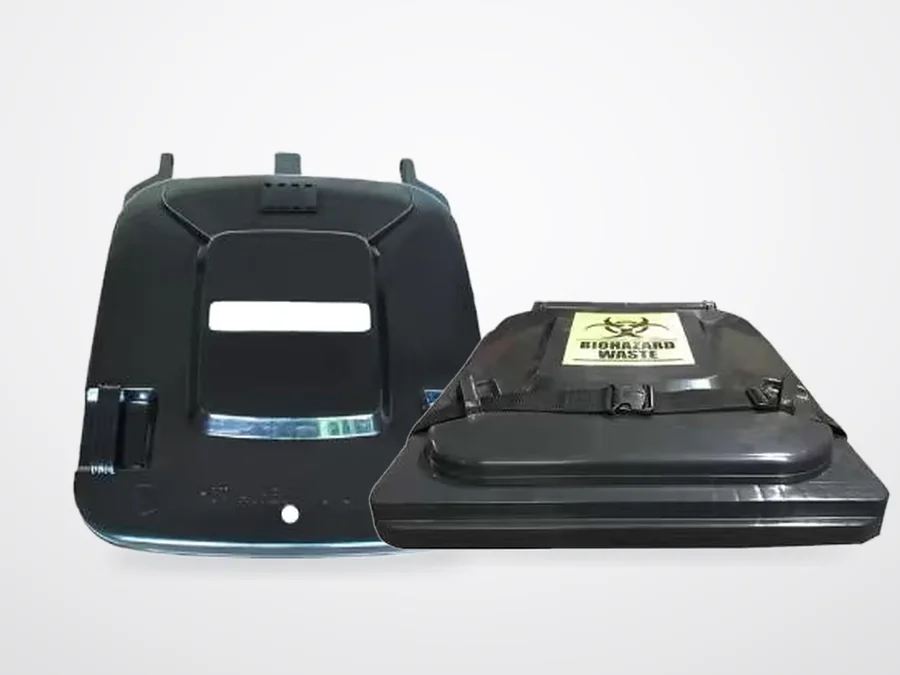
So secure bin stores, lockable lids and a quick check before lifting all matter for large containers. Councils such as Nottingham already supply lockable four-wheel bins.
Colours and Lids
Capacity is only one part of a council specification. Colour matters too, because residents sort waste by the colour of the lid or the body.
Schemes differ from place to place. For example, Islington Council asks for a green bin for recycling and a grey or black bin for rubbish.
Meanwhile, Buckinghamshire Council lists green bodies with green lids for waste and bright blue lids for recycling, with the council logo embossed on the body.
So bin makers often supply the same body with several lid colours. As a result, one mould serves many councils, and only the lid and the print change.
Replacement lids follow the same rule. Match the hinge, the colour and any locking feature to the exact bin model before you order.
Changing to a Different Size
Sometimes a household or a business outgrows its bin. Before switching, though, check a few practical points.
First, make sure the new container fits the space. A bin that blocks a path or a door creates new problems, even if it holds more waste.
Second, confirm that the collection vehicle can lift it. Most lorries handle common two-wheel and four-wheel containers, yet unusual designs may need a different lift.
Third, think about the extra weight. A larger bin is heavier to move when full, so the route to the kerb should stay short, firm and level.
Finally, ask about the parts. A new size may need different wheels, axles or castors, so update your spares list at the same time.
Bins for Flats and Businesses
Shared sites need a different approach from single homes. A block of flats or a busy restaurant fills containers fast, so collection days and storage space both shape the choice.
In many cases, a few large four-wheel containers work better than a long row of small ones. They take up less floor area per litre, and crews empty them in fewer lifts.
However, large containers are heavy when full. So the store needs a level route to the vehicle, working brakes on every slope, and enough light for crews working early in the morning.
Also, plan for separate waste streams. Recycling, food waste and general waste each need their own container, and each one needs space to open and move.
Planning a Bin Store
In fact, bin stores often cause more trouble than the bins themselves. Plan them with the largest bin sizes you may need in future, not just today's mix.
First, allow space around each container. Crews need room to open lids, to reach brake pedals and to pull the bin out without lifting it.
Next, keep the route to the vehicle short and level. Dropped kerbs and smooth paths make heavy containers much easier to move.
Also, think about washing. A drain in the floor and a drain cap in each large container let staff wash bins without tipping them.
For help with the parts side, see our castor range and baseplates and drain caps.
Key Terms Explained
- Nominal capacity
- The volume in litres that a maker states for a bin, such as 240 litres. It describes the body, not the weight it can carry.
- Maximum load
- The heaviest load a bin should carry. Wealden District Council, for example, lists 96 kg for a 240 litre bin.
- Eurobin
- A common name for large four-wheel containers, such as 660 and 1100 litre bins with lift trunnions.
- Comb lift
- A lifting device that grips the front rim of a bin. Two-wheel bins under EN 840-1 use comb lifting.
- Trunnion
- A side pin on a large container that a lifting arm grips to tip it into the collection vehicle.
Bin Sizes: Questions and Answers
What are the standard wheelie bin sizes?
Two-wheel bins usually come in 140, 180, 240 and 360 litres. Four-wheel containers usually come in 660, 770 and 1100 litres.
How big is a 240 litre bin?
Roughly 1.06 m high, 0.57 m wide and 0.72 m deep. Wealden District Council lists 1060 x 570 x 720 mm, while other councils give figures a few centimetres different.
How much weight can a wheelie bin hold?
It depends on the size. Wealden District Council lists 48 kg for a 140 litre bin, 96 kg for 240 litres and 440 kg for an 1100 litre container.
Do all bin sizes use the same wheels?
No. Two-wheel bins usually run on 200 mm wheels on an axle, while four-wheel containers run on castors, often 200 mm for 660 to 1100 litres.
Sources
- iTeh Standards: EN 840-1:2020, 2-wheel containers up to 400 l
- iTeh Standards: EN 840-4:2020, 4-wheel containers up to 1 700 l
- NSAI Standards: EN 840-5, performance requirements and test methods
- Wealden District Council: Bin sizes and maximum loads
- Croydon Council: Bin size and measurements (PDF)
- Islington Council: Wheelie bins guide
- Buckinghamshire Council: Bin specification, Appendix A
- Nottingham City Council: Commercial wheeled bin sizes
- BSI Knowledge: BS EN 840-2, 4-wheel containers up to 1 300 l with flat lids
- NSAI Standards: BS EN 840-6, safety and health requirements
- iTeh Standards: EN 1501-5:2021, lifting devices for refuse collection vehicles
- HSE: Collecting waste and recyclables
Product figures come from the Plastic MGB catalogue. Our editorial standards explain how we check facts and fix mistakes.