Castor Wheels for Bins: Rubber, Polypropylene, Steel or Polyamide?
For most waste bins, castor wheels with a solid rubber tread on a polypropylene hub give the best balance of quiet running, low weight and rust-free life. Choose a pressed steel hub for heavy loads and long pulls, and a polyamide hub on ball bearings for the heaviest containers.
Key takeaways
- A castor wheel has two parts: the tread that meets the ground and the hub that carries the bearing.
- Solid rubber treads run quietly and grip well, but rubber can crack with ozone over time.
- Polypropylene hubs stay light and rust-free, though PP turns brittle below 0 °C.
- Pressed steel hubs take more load and impact, while polyamide hubs suit the heaviest containers.
- Roller and ball bearings cut rolling friction compared with plain bearings, which matters on loaded bins.
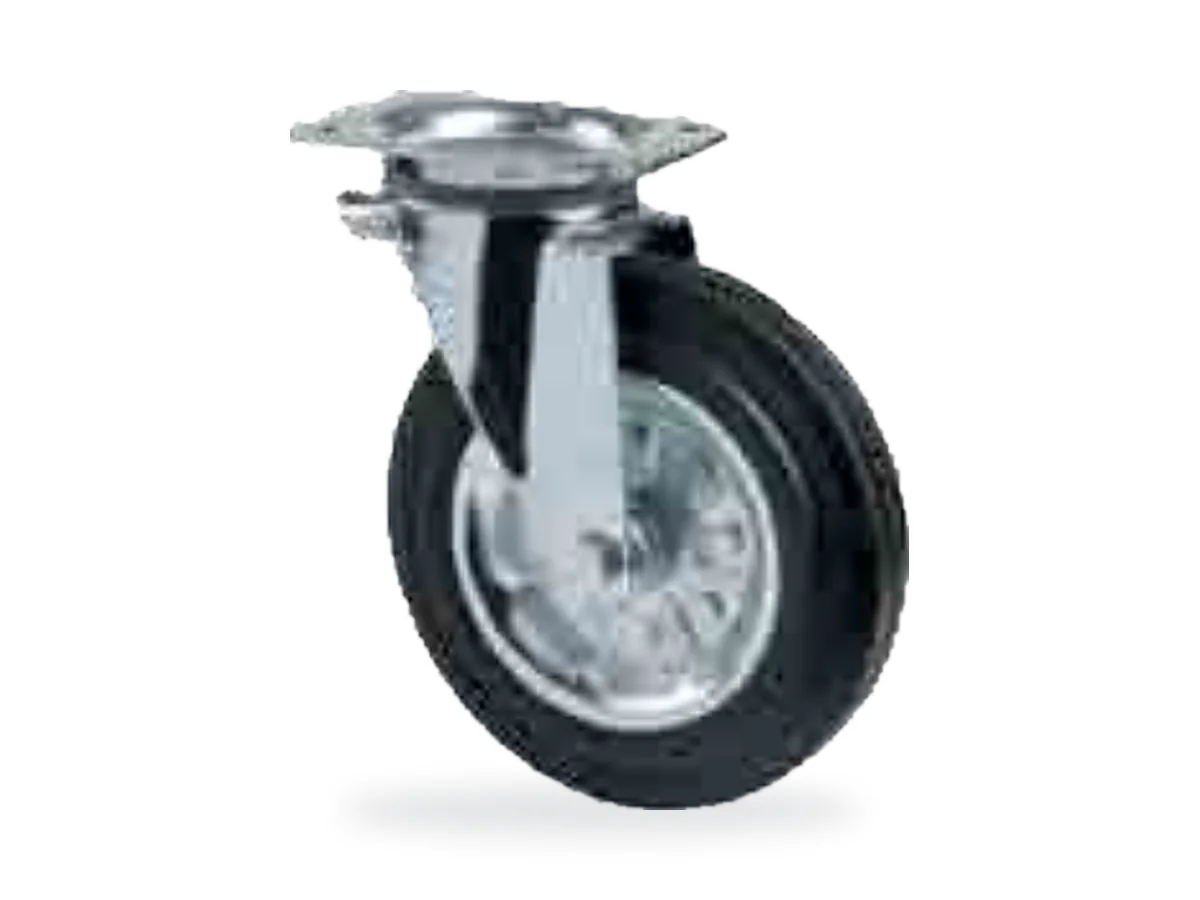
How Castor Wheels Are Built
First of all, every castor wheel has two main parts. The tread meets the ground, and the hub carries the bearing and the load.
Those two parts can also use different materials. So a single castor can have a soft rubber tread for grip and a stiff hub for strength.
Then the bearing sits inside the hub. It decides how easily the wheel turns, and it affects how hard a crew must push a loaded bin.
So this guide compares the four combinations we make for waste containers. It also explains what each material does well and where it struggles.
Solid Rubber Treads
For example, all our castor wheels for bins use a solid black rubber tread. It suits outdoor paving, kerbs and gravel, which is where most bins spend their lives.
Rubber also brings two key strengths. According to the natural rubber article, it is elastic and highly resilient. So it absorbs small bumps and keeps a loaded bin quiet on rough ground.
In addition, a solid tread never punctures. That matters for a container that sits outdoors all year and meets glass, nails and sharp stones.
However, rubber has a weak spot. The same article notes that natural rubber can crack when exposed to ozone, and that synthetic rubbers generally resist oils, heat and UV better. So check older treads for fine cracks.
Polypropylene Hubs
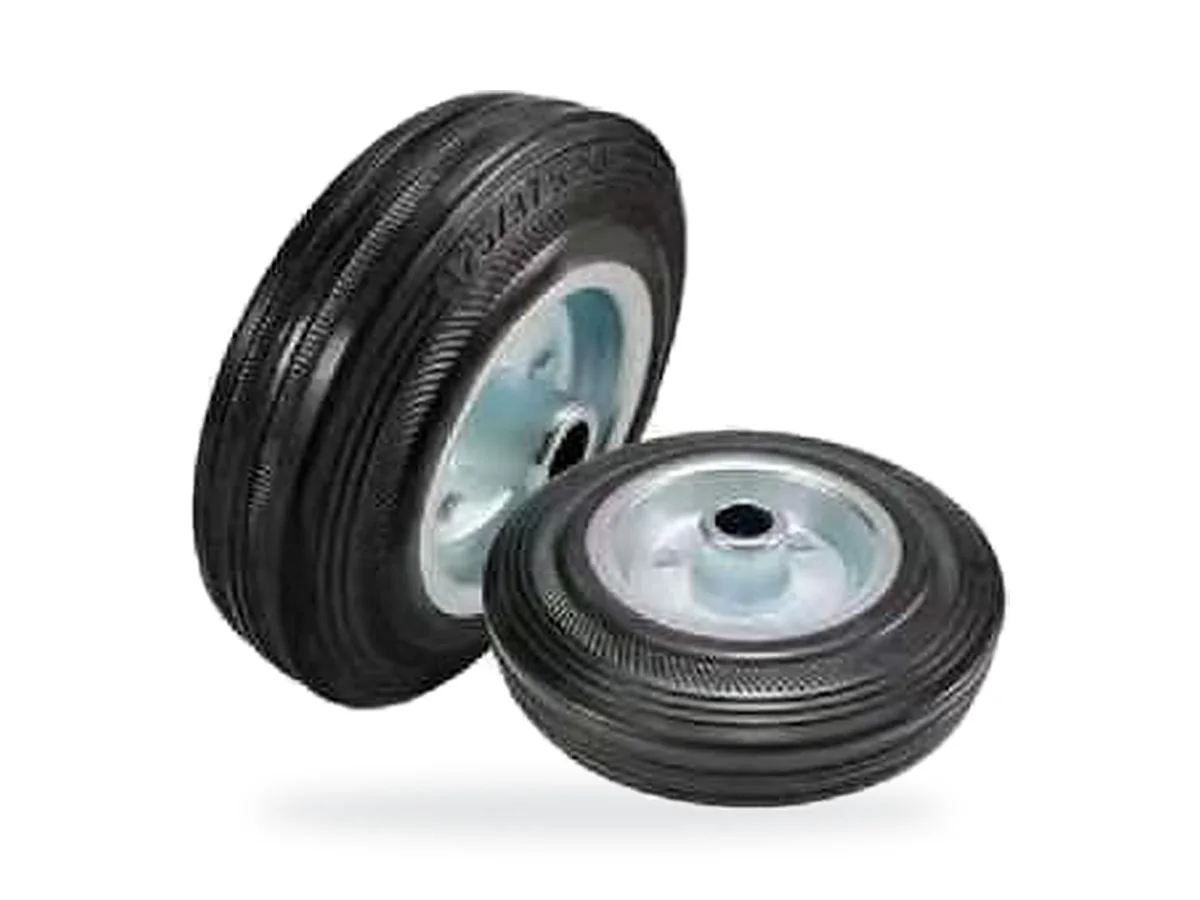
Next, polypropylene, or PP, is our most popular hub material. It is light, cannot rust and copes well with the wet, dirty base of a bin.
According to the polypropylene article, PP repels water and resists almost all organic solvents. That makes it a good match for food waste, rain and detergents.
It has limits, though, as with any plastic. The same source notes that PP turns brittle below 0 °C, and that sunlight degrades it unless the material contains UV stabilisers.
So PP hubs suit most bins in most climates. In very cold regions, or where bins take hard knocks in frost, a steel hub may last longer.
Pressed Steel Hubs
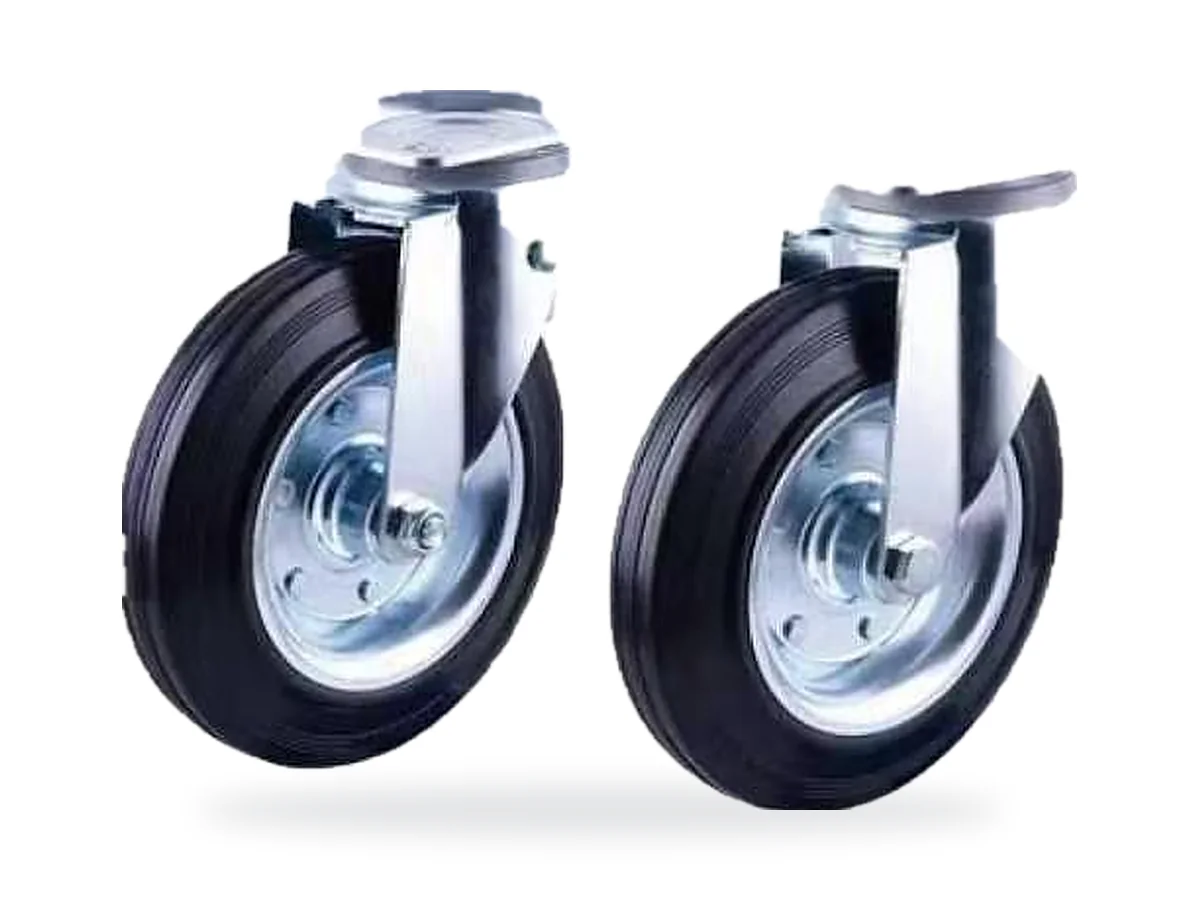
By contrast, pressed steel hubs give castor wheels higher load capacity and more impact resistance than PP. We recommend them for commercial bins that travel long distances or meet heavy collection vehicles.
Unlike PP, steel does not turn brittle in frost. On the other hand, it adds weight and needs a protective finish, so our steel hubs carry zinc plating.
In practice, buyers often choose steel hubs for city centres, industrial estates and any site where bins hit kerbs, forklifts or loading docks every day.
Polyamide Hubs for Heavy Duty
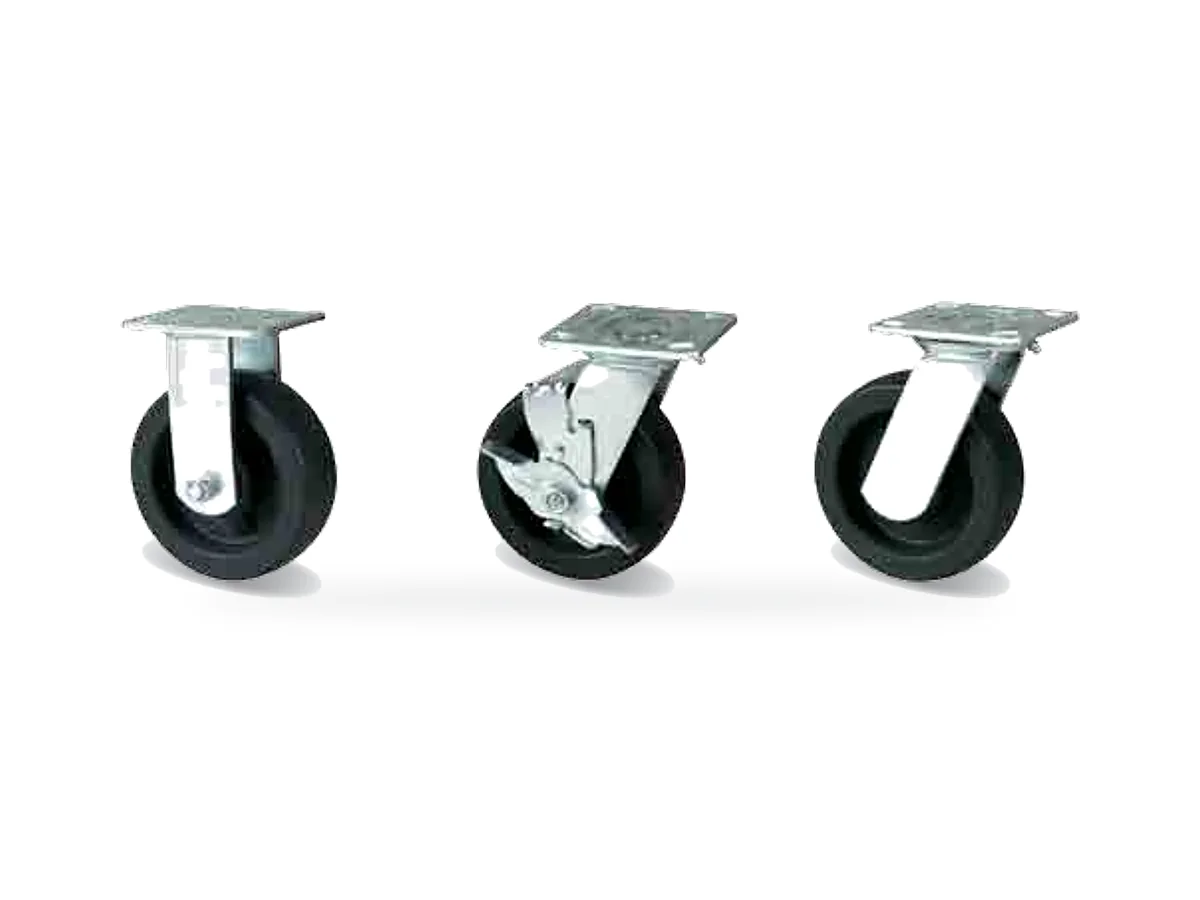
At the top of the range, our heavy duty castor uses a polyamide centre. Polyamide is the chemical family name for nylon.
As the nylon article explains, nylon combines strength and rigidity with some elasticity, and nylon 66 has excellent abrasion resistance. So it handles heavy loads without the weight of steel.
However, nylon also has a quirk. It absorbs moisture from the air, which changes its dimensions slightly and lowers its stiffness. Good designs allow for that, especially around the bearing.
For this reason, we pair the polyamide centre with precision ball bearings inside a reinforced pressed steel fork. It comes in fixed, swivel and swivel-with-brake versions for the heaviest containers and carts.
Compare the Four Builds
Overall, this table sums up the castor wheels we make for waste containers. Use it to shortlist a build for each type of bin.
| Build | Strengths | Watch out for |
|---|---|---|
| Rubber on PP hub | Light, rust-free, quiet | Brittle in hard frost |
| Rubber on steel hub | High load, impact | Heavier, needs plating |
| Polyamide hub | Heavy duty, ball bearings | Absorbs some moisture |
| 160 mm wheel | Compact containers | Light loads only |
Bearings Inside Castor Wheels
Now consider the bearing, which decides how freely a wheel turns. Two main types appear on bin hardware.
- First, plain bearings have no balls or rollers. According to the plain bearing article, they are cheap, compact and strong, but they wear and drag without good lubrication.
- Second, rolling-element bearings use balls or rollers. As the rolling-element bearing article explains, they roll with low friction, and roller types carry heavier radial loads.
Our 200 mm two-wheel bin wheel uses a plain bearing, which suits its light, simple duty. By contrast, our castor wheels for four-wheel bins run on roller bearings, and the heavy duty castor uses precision ball bearings.
That difference matters for crews, especially on long pulls. A loaded 1100 litre bin on good bearings starts and steers with far less effort.
Tread Hardness and Rolling Effort
Tread hardness also affects grip, noise and rolling effort. Makers describe it with a Shore number, and the Shore durometer article explains that the A scale suits softer materials while the D scale suits harder ones.
Softer treads grip better and run more quietly. Harder treads, in contrast, often roll more easily on smooth indoor floors.
The caster article adds a further point. Harder materials such as cast iron or high-profile polyurethane tend to pick up less debris. That matters on dirty sites where grit sticks to a soft tread.
For outdoor bins, a solid rubber tread remains the usual choice. Still, the trade-off explains why some indoor carts use harder castor wheels. Polyurethane is one such material, although the polyurethane article notes that some types can degrade through hydrolysis in moist conditions.
Wheel Size Matters as Much as Material
In the same way, diameter changes how castor wheels behave on rough ground. For instance, a bigger wheel rolls over gaps and kerbs more easily.
So we use 200 mm castors for 660L to 1100L containers and heavy carts. Smaller containers of about 30 to 120 litres use 160 mm castors, which keep the bin low and compact.
However, larger wheels need a taller fork and swing through a wider circle when they swivel. Bin designers balance those factors against the height of the lift on the collection vehicle.
Choosing Castor Wheels Step by Step
Next, follow these steps to narrow down the right build for a new container or a replacement programme.
Then test samples on your own sites. Real floors, slopes and kerbs reveal more than any table. Our castor range lists every build we make.
Castor Wheels and Cleaning
Bins get washed often, so castor wheels meet water, detergent and food residue every week. That routine affects each material differently.
For example, polypropylene hubs shrug off water and most cleaning chemicals, so they suit washdown sites well. Steel hubs, on the other hand, rely on their zinc plating, so check them for scratches where rust can start.
Also think about the bearing. Grit carried by washing water works its way into bearings, which is why our swivel heads carry a dust cover.
Finally, let bins drain and dry where possible. Standing water around castor wheels in a bin store speeds up wear on every part.
Castor Wheels for Different Sites
No single build suits every site. So match castor wheels to the ground and the workload.
- Residential bin stores with smooth paths: rubber on a PP hub keeps bins light and quiet.
- For city centres and industrial estates, steel hubs take the knocks from kerbs and loading docks.
- Cold regions with hard frost favour steel hubs, since PP turns brittle below 0 °C.
- Heavy carts and the largest containers suit polyamide hubs on ball bearings.
Also, ask crews where bins get stuck. Their answers often point straight to the wheel size or bearing that needs changing.
When to Replace Castor Wheels
Castor wheels wear gradually, so set clear replacement signs for crews. That way, nobody waits for a wheel to fail on the street.
First, replace any wheel with cracks in the hub or deep cuts in the tread. Next, replace wheels with flat spots that make the bin thump as it rolls.
Then check the bearing. If a wheel grinds, wobbles or stops turning freely after a clean, the bearing has worn out.
In most cases, replace the whole castor rather than the wheel alone. The fork, swivel and brake usually show the same wear by then.
Matching Wheels on One Bin
A bin rolls best when all four wheels match. Mixed builds pull the container to one side, and crews end up fighting it on every trip.
So when you replace one castor, check the other three. If they show similar wear, replace them as a set or at least in pairs on the same side.
Also keep the overall castor height the same. A taller or shorter castor tilts the bin, which can affect how it sits on the lift of the collection vehicle.
Finally, record the build on each bin model. A simple note of tread, hub, bearing and diameter makes the next order quick and accurate.
Noise and Neighbours
Collections often start early in the morning, so noise matters to residents. The wheel build plays a real part in how loud a bin sounds on the way to the lorry.
Elastic rubber treads absorb small bumps, so they run more quietly than hard treads on rough paving. Smooth bearings help too, because a dry or worn bearing rattles and squeals.
As a result, rubber treads remain the usual choice for residential bins. It is a small detail, yet it helps keep early collections quieter.
Standards and Crew Effort
In addition, castors for industrial equipment have their own standard. ISO 22883 sets requirements for castors and wheels on manually pushed or power-towed equipment up to 1.1 m/s, or 4 km/h, and national standards bodies sell it alongside identical national versions.
For the bins themselves, EN 840-5 sets performance requirements and test methods. Our castors and wheels carry EN 840 certification.
Crew effort matters too, because people move these bins by hand. HSE's RAPP tool and pushing and pulling guidance help employers assess tasks that involve moving wheeled loads, and the right castor wheels make those tasks easier.
Common Castor Wheel Mistakes
- Choosing on price alone: a cheap hub that cracks in frost costs more in repairs.
- Ignoring the bearing, even though plain bearings drag under heavy loads.
- Mixing builds on one bin, which makes it pull to one side.
- Using small wheels on rough ground: they catch on every gap and kerb.
Fortunately, each of these is easy to avoid at the design stage. For a full guide to castor layouts, read our article on castors for 660L and 1100L bins.
Key Terms Explained
- Tread
- The outer layer of the wheel that touches the ground. Ours use solid black rubber.
- Hub
- The centre of the wheel that carries the bearing and the load. Options include polypropylene, pressed steel and polyamide.
- Shore hardness
- A number that describes how hard a rubber or plastic is. The A scale suits softer materials and the D scale harder ones.
- Hygroscopic
- Able to absorb moisture from the air. Polyamide, or nylon, behaves this way, so its size changes slightly with humidity.
- Rolling resistance
- The force needed to keep a wheel rolling. Harder treads and better bearings usually lower it on smooth floors.
Castor Wheels: Questions and Answers
What are the best castor wheels for 1100 litre bins?
For most fleets, 200 mm castor wheels with a solid rubber tread and a polypropylene hub. Choose a pressed steel hub for heavy commercial waste and long pulls.
Are rubber or plastic castor wheels quieter?
Rubber treads usually run quieter, because rubber is elastic and absorbs small bumps. Hard treads pass more of each bump through to the bin.
Do polypropylene hubs crack in winter?
They can if they take a hard knock in frost, because PP turns brittle below 0 °C. In very cold regions, a steel hub is the safer choice.
What is a polyamide castor wheel?
It uses a polyamide, or nylon, centre. Our heavy duty castor pairs it with precision ball bearings for the heaviest containers.
Sources
- Wikipedia: Caster, encyclopedia article
- Wikipedia: Natural rubber, encyclopedia article
- NSAI Standards: ISO 22883:2004 product page
- Wikipedia: Polypropylene, encyclopedia article
- Wikipedia: Nylon (polyamide), encyclopedia article
- HSE: Risk assessment of pushing and pulling (RAPP) tool, INDG478
- Wikipedia: Polyurethane, encyclopedia article
- Wikipedia: Shore durometer, encyclopedia article
- ISO: ISO 22883:2004, castors and wheels up to 1.1 m/s (4 km/h)
- Wikipedia: Plain bearing, encyclopedia article
- Wikipedia: Rolling-element bearing, encyclopedia article
- NSAI Standards: EN 840-5, performance requirements and test methods
- HSE: Pushing and pulling loads: overview
Product figures come from the Plastic MGB catalogue. Our editorial standards explain how we check facts and fix mistakes.